
By Dr Alessandro Capozzoli, urologist at Aventino Medical Group
Haematuria can have many different causes: from benign conditions to situations that require prompt investigation. Understanding when further assessment is needed is essential.
A sign that should not be ignored
The presence of blood in the urine, known as haematuria, is a sign that requires attention. Sometimes it may be due to temporary or less concerning causes, such as a mild urinary tract infection or intense physical exertion. In other cases, however, it may be the first warning sign of a condition that deserves specialist assessment.
Even a single episode should not be underestimated, especially if the blood is visible to the naked eye or if the symptom tends to recur over time.

What can cause blood in the urine?
There are many possible causes. The most common include:
- urinary tract infections
- kidney or bladder stones
- inflammation of the bladder
- prostate problems in men
- trauma or intense physical exertion
In a smaller but clinically important number of cases, haematuria may also be associated with:
- bladder conditions
- abnormalities of the urinary tract
- kidney diseases
- lesions requiring specific investigations
For this reason, it is not advisable to wait for the symptom to “go away on its own” without clarifying its cause.
When should you see a urologist?
A urological assessment is particularly recommended when:
- blood is clearly visible in the urine
- the episode occurs more than once
- pain, burning or difficulty urinating appears
- risk factors are present, such as smoking or age over 50
- haematuria is detected on a urine test, even in the absence of other symptoms
Even when there is no pain, haematuria may still deserve attention. In fact, the absence of pain can lead people to postpone checks that it would be wiser to carry out earlier.

Which tests may be useful?
The diagnostic pathway varies depending on the patient’s age, symptoms and medical history. It may generally include:
- urine test
- urine culture, when indicated
- blood tests
- ultrasound of the urinary tract
In some cases, however, these tests are not enough to clearly visualise the inside of the bladder and urethra. In these situations, the specialist may recommend a more precise investigation.
When is cystoscopy needed?
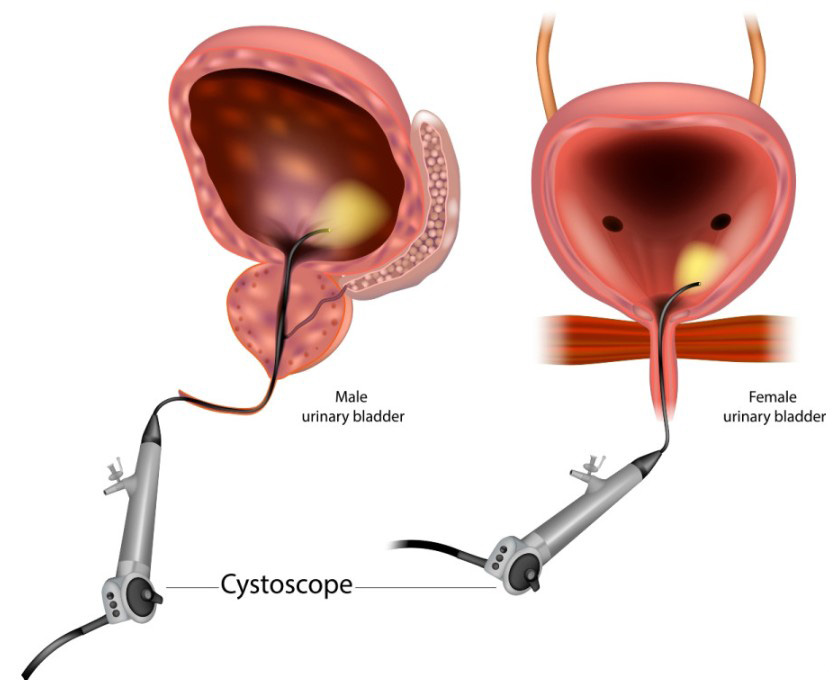
If the clinical suspicion requires it, one of the most useful examinations is cystoscopy, which allows the doctor to directly observe the inside of the bladder and urethra.
This is an important step especially when:
- blood in the urine is visible
- episodes recur
- preliminary tests do not clearly explain the problem
- it is necessary to rule out abnormalities of the bladder lining
Today, cystoscopy performed with modern instruments is a quick examination and is generally well tolerated.
Why it is better not to wait
One of the most common mistakes is to think that a single episode of blood in the urine, especially if painless, is not important. In reality, early diagnosis can make a difference, because it allows doctors to:
- rule out significant conditions
- intervene earlier, if necessary
- avoid delays in investigations
- address the problem with greater calm and clarity
When to book a consultation
If you have noticed blood in your urine, even only once, it is advisable to schedule a specialist assessment. A urological evaluation helps determine which tests are truly necessary and whether more in-depth examinations, such as cystoscopy, are indicated.

Conclusion
Blood in the urine does not always mean a serious condition, but it is always a sign that deserves attention. Addressing it in the right way allows you to obtain clear answers and take care of your health without delay.
Would you like to better understand what this examination involves?
You may also read the dedicated article: Cystoscopy: what it is, how it is performed and when it may be useful.
Book a urological assessment at Aventino Medical Group for a complete and personalised evaluation.