
The housemate that prefers not to be seen
Article prepared by the specialists at Aventino Medical Group.
Scientific review: Dr Guido Castelli Gattinara, Specialist in Infectious Diseases; Dr Alessandro Cristaudo, Specialist in Internal Medicine.
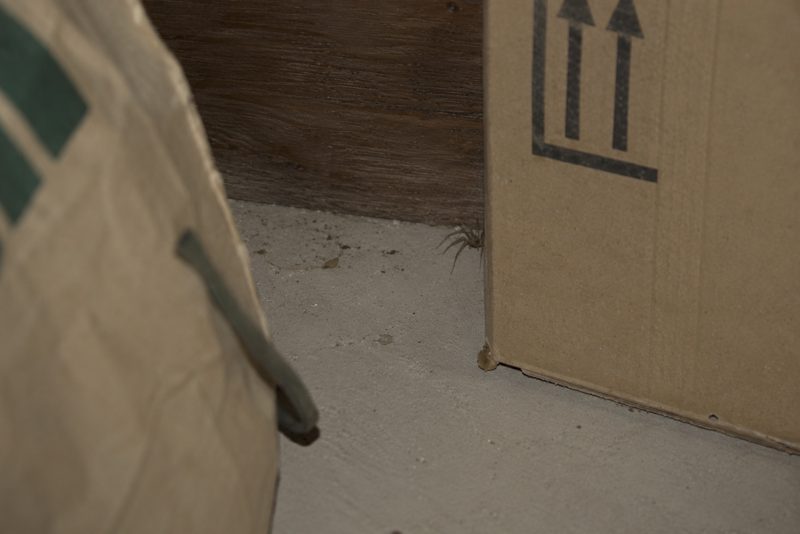
Few animals cause as much fear as spiders. Yet the good news is that most spiders found in Italy are completely harmless to humans.
Two species, however, regularly attract media attention and raise many questions: the violin spider and the Mediterranean black widow, known in Italian as the malmignatta.
The reality is less alarming than it is often portrayed online, but it is still worth learning about these animals, knowing where they are found and recognising the situations that require medical assessment.
Violin spider: the housemate that prefers not to be seen
The violin spider (Loxosceles rufescens) is found across much of Italy, particularly in the central and southern regions.
Its name comes from a distinctive dark marking on the cephalothorax that vaguely resembles the shape of a violin. It is not always easy to see with the naked eye, but this marking is the origin of the common name “violin spider”.
Contrary to popular belief, it does not mainly live in forests or gardens. It prefers dry, dark and undisturbed places such as:
- cellars;
- garages;
- attics;
- storage rooms;
- behind furniture that is rarely moved;
- boxes and storage areas.
It is a shy animal and is mainly active at night.
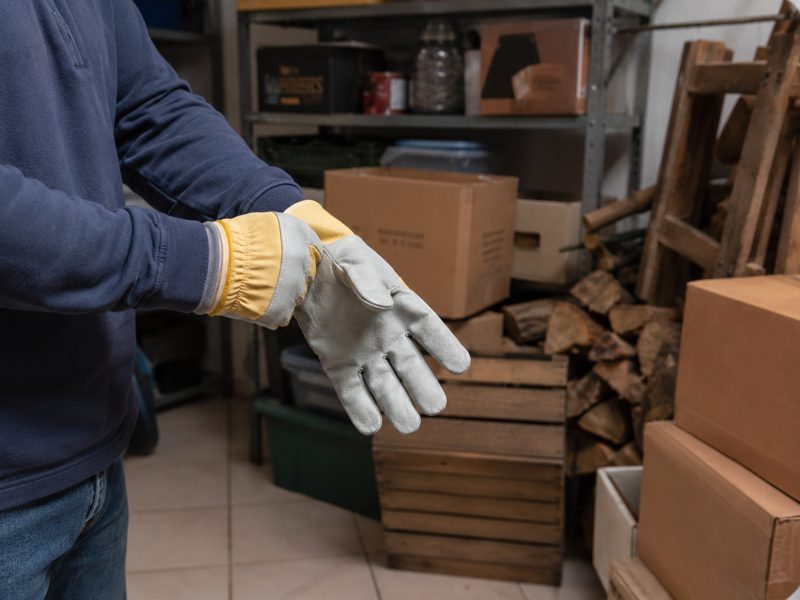
How does the bite occur?
The violin spider is not aggressive and does not attack humans.
Bites almost always occur accidentally:
- when a hand is placed inside a glove or shoe where the spider has hidden;
- when boxes or furniture that have not been moved for a long time are handled.
Can it really bite while you are sleeping?
Yes, it can happen, but not because the spider actively seeks out humans. The violin spider is not aggressive and generally prefers to hide.
Because it is nocturnal, a bite may occur if the spider is accidentally trapped and crushed between the skin and the bed sheets, or between the skin and an item of clothing. Even in these cases, the bite is therefore caused by accidental contact, not by an attack.
What symptoms can it cause?
This is where many misunderstandings begin.
In most cases, the bite causes:
- mild redness;
- a slight burning sensation;
- minor local swelling.
Many people do not even realise that they have been bitten.
In a minority of cases, a more significant lesion may develop and worsen over the following hours or days, causing:
- increasing pain;
- spreading redness;
- the formation of a blister;
- skin ulceration;
- tissue necrosis, in rare cases.
The lesion may become relatively large and may take several weeks to heal.
An important clarification
🕷️ Not all skin lesions attributed to the violin spider are actually caused by this spider.
Many bacterial infections, bites or stings from other insects, and small infected wounds are mistakenly identified as violin spider bites.
For this reason, a definite diagnosis is often difficult.
When should you consult a doctor?
Medical assessment is advisable if:
- the pain progressively increases;
- an ulcerated lesion develops;
- the redness continues to spread;
- fever or general symptoms appear.
Mediterranean black widow: the black widow of the Mediterranean
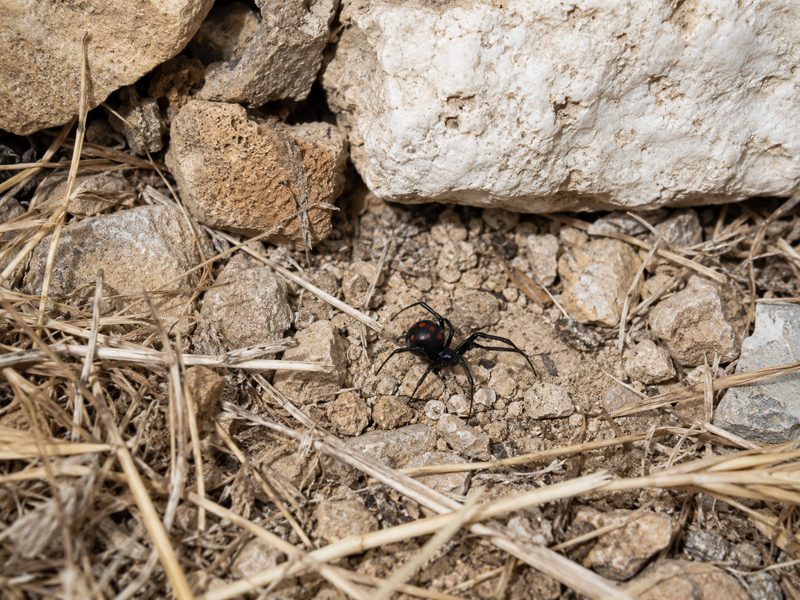
The Mediterranean black widow (Latrodectus tredecimguttatus), known in Italian as the malmignatta, belongs to the same family as the black widow spiders found in other parts of the world.
It is a shiny black spider, often characterised by red spots on its abdomen.
Fortunately, it is much less common than the violin spider.
Where is it found?
It prefers:
- the countryside;
- cultivated fields;
- dry-stone walls;
- warm, sunny rural areas;
- areas with tall grass and stones.
It is mainly encountered in the central and southern regions of Italy.
How does the bite occur?
The Mediterranean black widow is also not particularly aggressive.
Bites generally occur:
- during agricultural work;
- while collecting firewood;
- while moving stones;
- after accidentally coming into contact with the spider.
What symptoms can it cause?
Unlike the violin spider, the Mediterranean black widow mainly causes systemic symptoms.
After a bite, the following may occur:
- local pain;
- severe muscle cramps;
- muscle stiffness;
- abdominal pain;
- sweating;
- nausea;
- agitation;
- increased blood pressure.
The symptoms can be very alarming but, in most cases, they resolve favourably with appropriate treatment.
🕷️ Spider bites: when should you really be concerned?
Most spider bites observed in Italy do not require urgent treatment.
Prompt medical attention is recommended if any of the following symptoms occur:
- severe and progressively worsening pain;
- fever;
- extensive skin ulceration;
- severe muscle cramps;
- difficulty breathing;
- neurological symptoms;
- a general worsening of the person’s condition.
Young children, older people and medically vulnerable individuals always require particular attention.
What should you do after a suspected spider bite?
✅ Wash the area with soap and water.
✅ Apply a cold compress.
✅ Monitor the lesion over the following hours.
✅ Taking photographs of the lesion may be useful for documenting how it changes over time.
If the spider can be observed without taking any risks, a photograph may help the doctor identify it.

How can bites be prevented?
Prevention is simple and highly effective.
🧤 Wear gloves when handling boxes, firewood or materials that have been left undisturbed for a long time.
👟 Check shoes and clothing that have been left outdoors or in a garage.
📦 Take care when clearing out cellars, attics or storage areas.
🌾 Wear gloves and suitable clothing when carrying out agricultural or gardening work.
Did you know?
Many spiders are useful in homes and gardens.
They help to naturally control mosquitoes, flies and other small insects.
The violin spider does not build the classic geometric spider webs.
It prefers to hide in quiet, rarely disturbed places, where it produces irregular and barely visible strands of silk.
In summary
📍 Where? The violin spider is mainly found in indoor environments; the Mediterranean black widow is found in the countryside and rural areas.
📍 When? More frequently during the warmer months.
📍 Main symptom of a violin spider bite? A skin lesion that may worsen over time.
📍 Main symptom of a Mediterranean black widow bite? Muscle cramps and systemic symptoms.
📍 First aid? Washing, cold compresses and observation.
📍 Prevention? Gloves and caution around shoes, boxes, firewood and rarely used environments.
Concerns after a sting or bite?
If you experience severe pain, worsening of the lesion, fever, or feel generally unwell, seek prompt medical attention or go to the nearest Emergency Department.
For non-urgent concerns, you can book an appointment at Aventino Medical Group.