
One of the most feared animals, yet rarely aggressive
Article prepared by the specialists at Aventino Medical Group.
Scientific review: Dr Alessandro Cristaudo, Specialist in Internal Medicine; Dr Paola Groff, Specialist in Paediatrics.
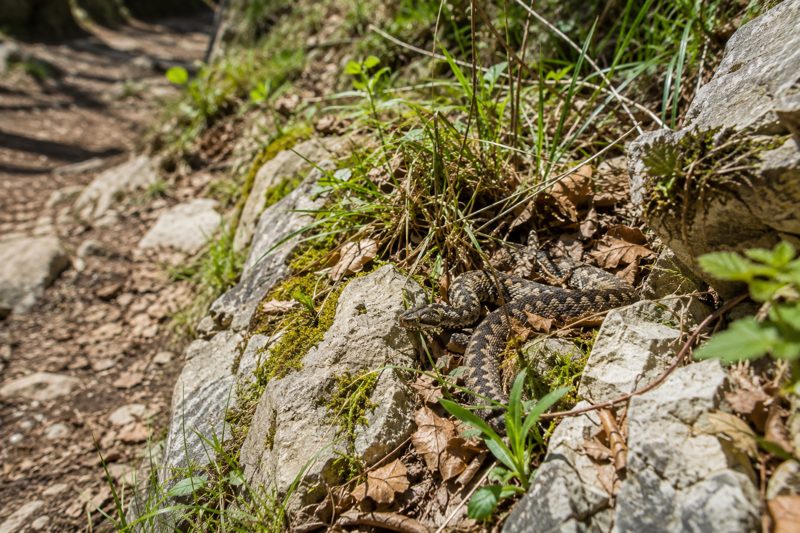
Few creatures cause as much concern as the viper. Yet despite its bad reputation, this snake generally tries to avoid contact with humans and bites almost exclusively when it feels threatened or is accidentally stepped on.
In Italy, vipers are found in many regions, particularly in hilly and mountainous areas. Encounters may occur during hikes, but bites remain relatively rare events.
Where are vipers found?
Vipers prefer quiet, sunny environments with plenty of hiding places.
They are more commonly encountered:
- along mountain trails;
- in open woodland;
- among rocks and dry-stone walls;
- in sunny meadows;
- in hilly areas;
- near piles of firewood or stones.
They are particularly active from spring through autumn.
During the hottest hours of the day, they may be seen basking in the sun on rocks, trails or stone walls.
How can you recognise a viper?
Some features are fairly typical:
- a relatively short, thick body;
- a triangular head clearly distinct from the neck;
- vertical pupils, similar to those of a cat;
- a dorsal pattern that is often zigzag-shaped.
However, confidently distinguishing a viper from other harmless snakes can be difficult, even for experienced people.
For this reason, it is always best to keep your distance and avoid trying to identify it at close range, capture it or kill it.
How does the bite occur?
A viper does not attack humans in order to hunt them.
Bites generally occur when:
- the snake is accidentally stepped on;
- someone tries to pick it up;
- a hand is placed among rocks, bushes or piles of firewood;
- the snake is surprised at close range.
Many hikers do not see the animal until the moment of contact.
What symptoms can it cause?
The bite is generally painful from the outset.
The most common symptoms are:
- severe pain at the site of the bite;
- progressive swelling;
- redness;
- a sensation of tightness in the skin.
Two small, closely spaced puncture marks left by the venomous fangs are often visible, although their absence does not completely rule out a bite.
In more significant cases, the following may occur:
- nausea;
- vomiting;
- sweating;
- weakness;
- dizziness;
- low blood pressure;
- a general feeling of being unwell.
Severity depends on several factors:
- the amount of venom injected;
- the location of the bite;
- the age of the person affected;
- body weight;
- general health;
- the time elapsed before medical assessment.
Viper bite: what happens over the following hours?
A viper bite is not always equally severe.
In some cases, it may be a “dry bite”, meaning that no significant amount of venom has been injected. In other cases, however, the venom causes local and systemic symptoms that may develop over the following hours.
During the first few minutes, the following usually appear:
- pain at the site of the bite;
- swelling;
- redness;
- possibly two small, closely spaced puncture marks.
Over the following hours, the swelling may increase and spread upwards along the limb. The following may occur:
- nausea;
- vomiting;
- sweating;
- weakness;
- dizziness;
- low blood pressure;
- a general feeling of being unwell.
Significant symptoms often appear within the first few hours, but medical observation is necessary because the condition may worsen progressively.
Are children at greater risk?
Yes.
For the same amount of venom, a child receives a proportionally larger dose than an adult. For this reason, every suspected viper bite in a child requires urgent medical assessment.
Particular caution is also required in older people, pregnant women and people with chronic medical conditions.
🐍 Do vipers really chase people?
No.
This is one of the most widespread and least substantiated beliefs.
A viper tends to move away when it detects vibrations or noise and prefers to avoid contact with humans.
Most bites occur because the animal is accidentally stepped on or because someone tries to approach it too closely.
💡 Good to know: many people who have been bitten report that they did not see the viper before the incident.
What should you do after a bite?
✅ Stay calm.
✅ Move away from the animal.
✅ Keep the person still, preferably lying down.
✅ Immobilise the affected limb as much as possible.
✅ Remove rings, bracelets, tight shoes or restrictive clothing, as swelling may increase rapidly.
✅ Call 112 or reach an Emergency Department as quickly as possible.
✅ If possible, use a pen to mark the edge of the swelling and write down the time, to help doctors assess its progression.
If the snake is still visible, it may be useful to remember what it looked like or photograph it from a distance, without exposing yourself to further risk.
What should you do if you are far from a medical facility?
The most important thing is to minimise movement.
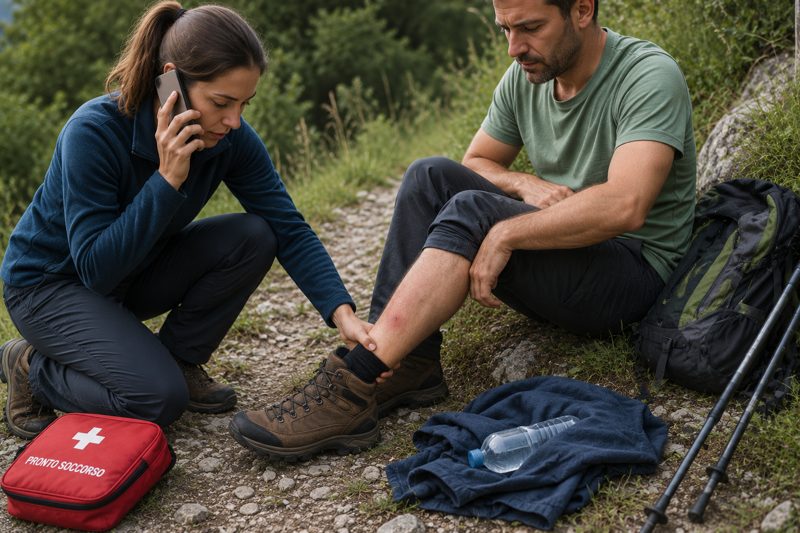
Walking, running or becoming agitated may promote the spread of the venom. If you are on a trail, in the mountains or in an isolated area, it is better to stop and arrange for emergency assistance.
If possible:
✅ call 112 immediately;
✅ keep the person calm and lying down;
✅ immobilise the affected limb with an improvised splint or simply keep it still;
✅ prevent the person from walking;
✅ protect the person from heat or cold while waiting for help;
✅ monitor their general condition, breathing and level of consciousness.
If transport is unavoidable, the person who has been bitten should exert as little effort as possible.
What should you NOT do?
❌ Do not cut the wound.
❌ Do not suck out the venom.
❌ Do not apply a tourniquet.
❌ Do not tighten the limb with improvised compression bandages.
❌ Do not apply ice directly to the wound.
❌ Do not give alcohol.
❌ Do not run to seek help.
❌ Do not attempt to capture or kill the snake.
These practices, although once widespread, are ineffective and may worsen the situation.
Is there any medication you should carry with you?
No. Carrying viper antivenom is neither useful nor recommended.
Antivenom must only be administered in hospital, following medical assessment and under monitoring, because it can cause serious reactions and is not indicated in every case.
What does make sense to carry during a hike is a small, practical kit containing:
- a fully charged phone;
- a power bank;
- water;
- disinfectant;
- sterile gauze;
- a light elastic bandage for immobilisation, not for tightening;
- paracetamol as a simple painkiller;
- an antihistamine, useful for allergic reactions but not for neutralising viper venom;
- a pen for marking the extent of the swelling and the time;
- an adrenaline auto-injector only if it has already been prescribed for severe allergies.
After a suspected viper bite, it is prudent to avoid aspirin and anti-inflammatory medicines such as ibuprofen or ketoprofen, unless otherwise advised by a doctor, because they may interfere with bleeding or blood clotting.
Treatment in hospital
In the Emergency Department, the patient is monitored through:
- blood pressure and vital-sign checks;
- assessment of the extent of the swelling;
- blood tests;
- blood-clotting tests;
- pain management;
- tetanus prophylaxis, if required;
- clinical observation.
Antivenom is not always administered. It is reserved for cases involving signs of significant envenomation, systemic symptoms or marked worsening of the local condition.
The decision is made by the doctor, often in consultation with a Poison Control Centre.
How can bites be prevented?
Prevention is simple and highly effective.
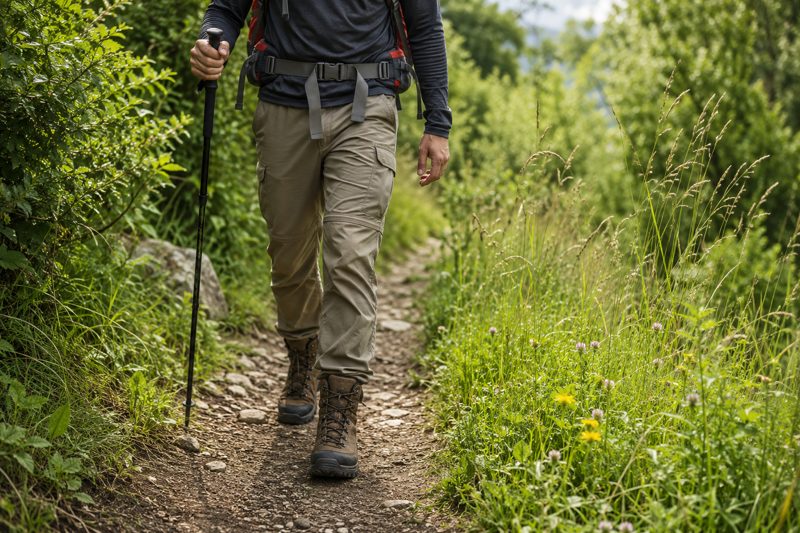
🥾 Wear hiking boots or closed shoes during walks and hikes.
👖 Choose long trousers on trails with tall vegetation.
👀 Watch where you place your hands and feet.
🪵 Take care when moving stones or piles of firewood.
🚶 Stay on marked trails during walks.
🧒 Teach children never to touch snakes, even if they appear motionless or dead.
Did you know?
A viper can control how much venom it injects during a bite.
Not all bites deliver the same amount of venom. Some may even be “dry”, but they must still always be assessed by a doctor.
Most viper bites occur on the hands, not the feet.
Many accidents happen when people try to catch, move or kill the animal, which then bites in self-defence.
In summary
📍 Where? Hills, mountains, woodland, sunny meadows and rocky areas.
📍 When? From spring through autumn, especially on warm days.
📍 Main symptom? Pain and progressive swelling at the site of the bite.
📍 Main risk? Systemic effects of the venom, particularly in children and medically vulnerable people.
📍 First aid? Immobilise the limb, minimise movement and reach an Emergency Department quickly.
📍 Medication to carry? Not viper antivenom; it is better to carry a charged phone, a first-aid kit and have the ability to call 112.
📍 Prevention? Closed shoes, caution along trails and respect for wildlife.
Concerns after a sting or bite?
If you experience severe pain, increasing swelling, or general symptoms, call the local emergency services (112/118) or go to the nearest Emergency Department immediately.
For non-urgent concerns, you can book an appointment at Aventino Medical Group.