
By Dr. Gabriella Nataloni and Dr. Alessandro Cristaudo, internal medicine physicians at Aventino Medical Group, Rome.
Practical guide for people living in or staying in Rome
In Italy, medical emergencies are managed mainly by hospital Emergency Departments (Pronto Soccorso – PS) and the territorial emergency system (118 / 112).
Access to care does not follow the order of arrival, but the severity of the condition.
Understanding when to go to the Emergency Department, which numbers to call and what to expect is essential if you live in Rome or are here temporarily.

When and how to access the Emergency Department
You can reach the Emergency Department (PS) in four ways:
- Direct access
You go to the hospital on your own initiative if you believe your condition is urgent. - Referral by a doctor
Your GP, paediatrician or the out-of-hours medical service (116117) may refer you to the ED if they think urgent assessment is needed. - Calling 118 (or 112)
For serious emergencies such as:
– sudden chest pain
– suspected stroke
– breathing difficulties
– major trauma, road accidents
– loss of consciousness, seizures, shock - From other healthcare facilities
Some patients are sent to the ED by clinics, doctors or outpatient centres for urgent admission or further investigations.
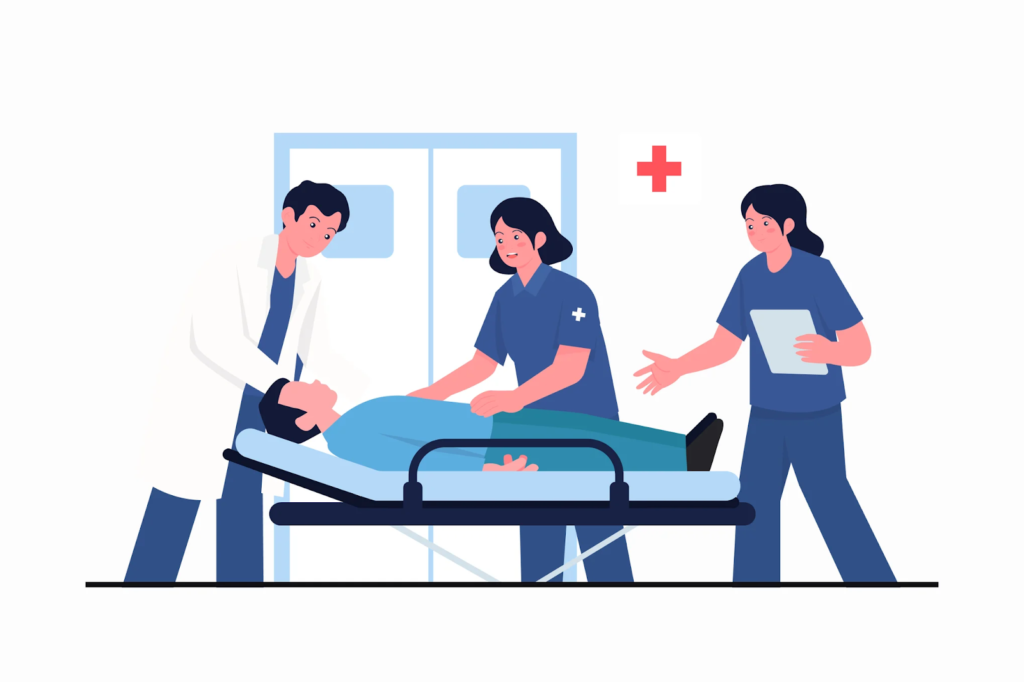
When the Emergency Department is appropriate
It is indicated for problems that cannot wait, such as:
- severe pain (chest, abdomen, head)
- trauma, fractures, major wounds, bleeding
- high fever not responding to medication, poor general condition
- difficulty breathing
- suspected heart attack or stroke
- sudden worsening of a chronic disease
For minor issues (colds, mild pain, prescription renewals, medical certificates, routine check-ups), it is better to contact:
- your GP / paediatrician
- private outpatient clinics
- the out-of-hours medical service: 116117
Triage: who is seen first
When you arrive at the ED, a triage nurse quickly assesses your condition (blood pressure, oxygen saturation, symptoms, brief history) and assigns a priority code.
In the Lazio region a 5-code system is used:
| Code | Colour | Meaning | Examples |
| 1 | 🔴 Red | Absolute emergency – immediate | cardiac arrest, shock, coma |
| 2 | 🟠 Orange | High urgency – very rapid | chest pain, major trauma |
| 3 | 🔵 Light blue | Deferrable urgency – can wait | high fever, moderate pain |
| 4 | 🟢 Green | Minor urgency | mild symptoms, localised pain |
👉 This system is not a matter of politeness, but a way to ensure that people whose lives are at risk are treated immediately, even if they arrived later than others.
What happens once you arrive
The typical Emergency Department pathway:
1. Registration (Accettazione)
Your personal details are recorded. You will be asked for:
– ID card or passport
– Italian health card (if available)
– any insurance documents
2. Triage
Brief symptom assessment and assignment of a priority code.
3. Waiting time
Depends on:
– the code assigned
– the number of patients present
– available resources (doctors, beds, etc.)
4. Medical examination and tests
The doctor decides which tests are needed, for example:
– blood and urine tests
– ECG
– X-rays, CT scan, ultrasound, etc.
5. Final decision
– discharge with treatment plan and instructions
– short-stay observation (OBI – Osservazione Breve Intensiva) for a few hours
– hospital admission to a ward
Waiting times: what is realistic
On average (indicative values):
- Red code → immediate access
- Orange code → usually seen quite quickly (around 30–60 minutes)
- Green code → may wait 1–3 hours
- Light blue / white code → waiting time can be long (over 3 hours), or the case can be redirected to community services
During periods of high attendance (weekends, flu season, viral outbreaks, public holidays), waiting times are longer, especially for less serious conditions.
Indicative waiting times on regional portals (e.g., Salute Lazio – Emergency Room).

Costs and co-payments
If you have an Italian health card (SSN)
- Real emergencies and urgent conditions (more severe codes) → generally exempt from co-payment (ticket).
- Access for non-urgent problems (white codes and sometimes green codes) → a ticket may be charged (in Lazio around €25) for inappropriate use of the ED.
If you do not have an Italian health card
You may have to pay the full cost of care at the time of service, unless:
- there are agreements between Italy and your home country (European forms, public insurance)
- you have private insurance that covers the costs
Private hospitals and clinics
- In private clinics or non-contracted private hospitals, costs are generally higher.
- Often you pay upfront and later request reimbursement from your insurance.
- Some facilities work with direct billing to international insurers (the clinic bills the insurer directly, with no upfront payment from the patient).
Where to go in Rome in case of emergency
Major public hospitals with Emergency Department
(short, non-exhaustive list)
- Policlinico Umberto I – Termini/Policlinico area
- San Camillo-Forlanini – Monteverde/Trastevere (general ED, some paediatric activity)
- Santo Spirito in Sassia (ASL Roma 1) – Vatican/Prati area
- San Filippo Neri (ASL Roma 1) – Trionfale area
- Policlinico Gemelli – Monte Mario area (general and paediatric ED)
- Sant’Andrea – northern Rome
- Sant’Eugenio – EUR area
- Policlinico Casilino – eastern Rome
Private accredited hospitals with ED under the National Health Service (SSN)
- San Carlo di Nancy (GVM) – Aurelia
- Cristo Re – Balduina
- Aurelia Hospital – Aurelia
In these hospitals, the Emergency Department can work both under the SSN (with health card) and in private / insurance mode.
24/7 urgent care in private clinics (non-SSN ED)
- UPMC Salvator Mundi – Monteverde Vecchio
- Mater Dei General Hospital – Parioli
- Villa Salaria Hospital – Via Salaria area
These clinics provide 24/7 private urgent care, with the possibility of admission and, often, English-speaking and multilingual staff.
What the Emergency Department does (and does not) treat
Typical Emergency Department situations
- trauma, fractures, wounds, burns
- breathing difficulties, severe asthma attacks
- sudden chest pain, suspected heart attack
- sudden weakness on one side of the body, trouble speaking (suspected stroke)
- seizures, loss of consciousness
- major bleeding
- sudden worsening of chronic illnesses (diabetes, heart failure, COPD, etc.)
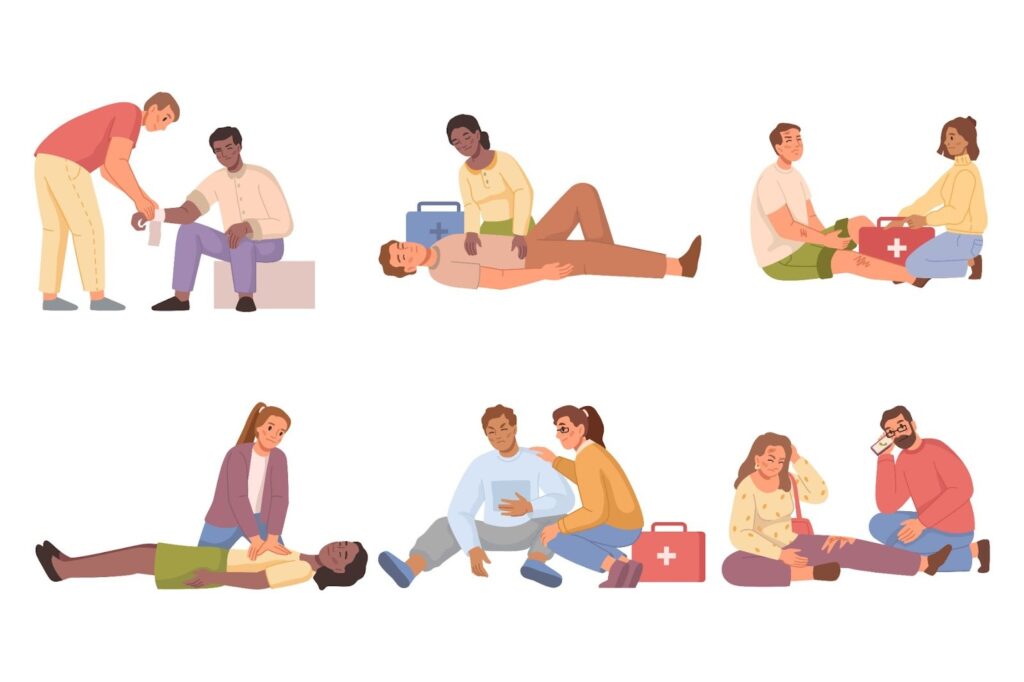
Situations not for the Emergency Department
- colds, mild sore throat, ordinary cough
- routine check-ups or planned follow-ups
- requests for medical certificates, prescriptions, renewal of chronic therapies
- mild, long-standing pain (e.g. chronic back pain with no red flags)
In these cases it is more appropriate to contact:
- your GP / paediatrician
- specialist outpatient clinics
- the out-of-hours medical service: 116117
Documents and information to bring
When you go to the Emergency Department, it is useful to bring:
ID card or passport
Italian health card or European Health Insurance Card (if available)
insurance policy details (number, contacts, coverage conditions)
list of medicines you take regularly
recent medical documents (tests, reports, discharge letters)
list of any drug allergies
emergency contact (family member, friend)
👉 Always ask for a detailed invoice (“fattura parlante”) if you may need an insurance reimbursement.
Paediatric emergencies
For children, it is preferable, when possible, to go to a paediatric Emergency Department:
- Ospedale Pediatrico Bambino Gesù (Gianicolo) – 24/7 paediatric ED, national reference centre
- Policlinico Gemelli – 24/7 paediatric ED
Other general hospitals (e.g. San Camillo, Sant’Eugenio) can offer paediatric consultations, but they do not have a dedicated paediatric ED.
Practical tips for visitors and expats
- 📱 Before going to the Emergency Department, you can check crowding levels and indicative waiting times on regional portals (e.g. Salute Lazio – Pronto Soccorso).
- ☎️ For non-urgent problems, if you are in Rome you can contact Aventino Medical Group on +39 06 57 80 738: all doctors and front-desk staff speak English, and some also speak French. Outside the GP’s opening hours, the 116117 out-of-hours service remains active.
- 🌍 If you do not speak Italian, at triage you can ask whether staff is available who speak English or other languages.
- 🧾 Always keep all medical documents (reports, test results, prescriptions) and administrative documents (receipts, invoices), useful for insurance reimbursement and follow-up.
- 🚑 In case of severe symptoms (chest pain, suspected stroke, major trauma, loss of consciousness), do not go by taxi: call 118 or 112.
Useful numbers in Italy
| Service | Number | Note |
| Medical emergency | 118 | Ambulance / emergency medical aid |
| Single emergency number | 112 | Police, carabinieri, fire, rescue |
| Out-of-hours medical service | 116117 | Non-urgent problems outside GP hours |
| Lazio regional health information | 800 118 800 | Salute Lazio toll-free number |