
Small, silent, and often underestimated
Article prepared by the specialists of Aventino Medical Group.
Scientific review: Dr Guido Castelli Gattinara, Specialist in Infectious Diseases; Dr Luigi Cornacchia, Specialist in Dermatology; Dr Paola Groff, Specialist in Paediatrics.
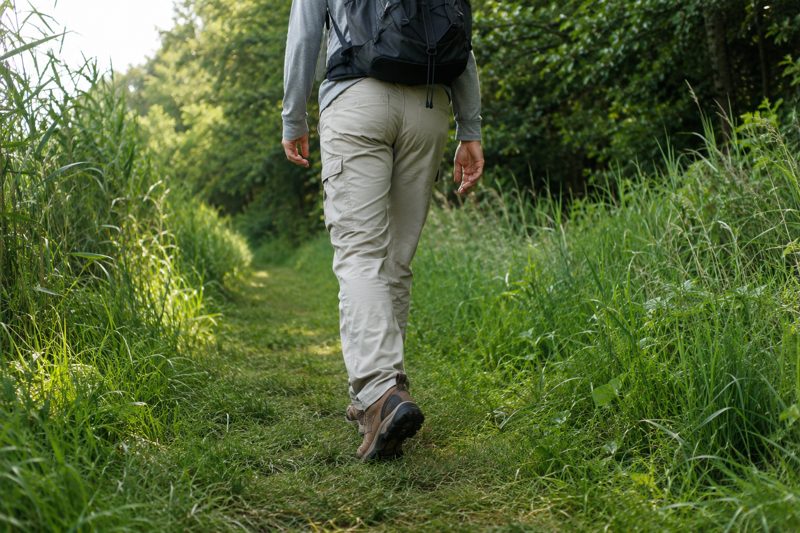
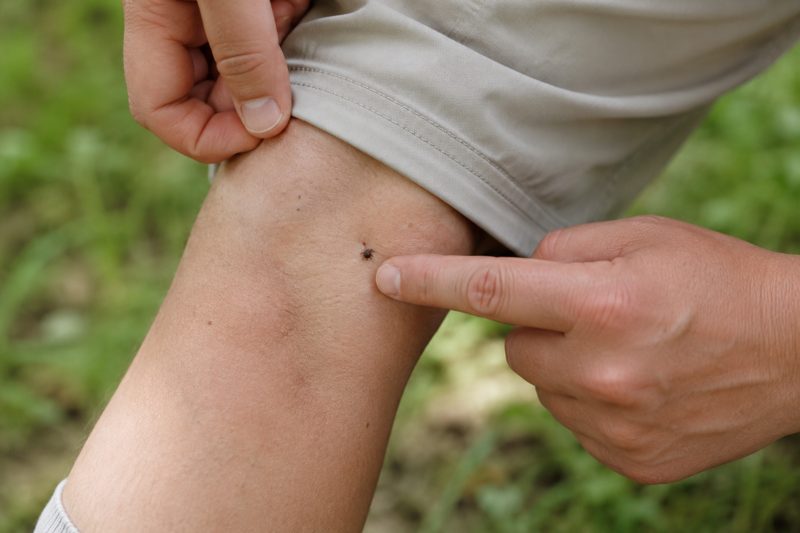
Unlike mosquitoes, ticks do not bite in self-defence, but in order to feed. Once attached to the skin, a tick may remain unnoticed for many hours or even several days.
The bite is generally painless, which is why many people only notice the tick while showering or changing their clothes after a walk.
Where are ticks found?
Contrary to popular belief, ticks do not live in trees and do not jump onto people.
They are mainly found:
- in meadows with tall grass;
- along woodland paths;
- in hilly and mountainous areas;
- in areas frequented by wild animals;
- in nature parks and the countryside.
They are particularly active from spring to autumn. In Italy, they are most commonly found at altitudes below 1,400 metres, although they may also be present at higher elevations in some mountainous areas.
How does a tick bite occur?
Ticks position themselves on grass or low-growing shrubs and attach themselves to animals or people as they pass by.
Once they reach the skin, they look for a warm, concealed area in which to attach, such as:
- the armpits;
- the groin;
- the scalp;
- skin folds;
- the area behind the knees.
Because tick saliva contains anaesthetic substances, the bite often goes unnoticed.
What should you do if you find a tick?
✅ Early removal is the most important measure.
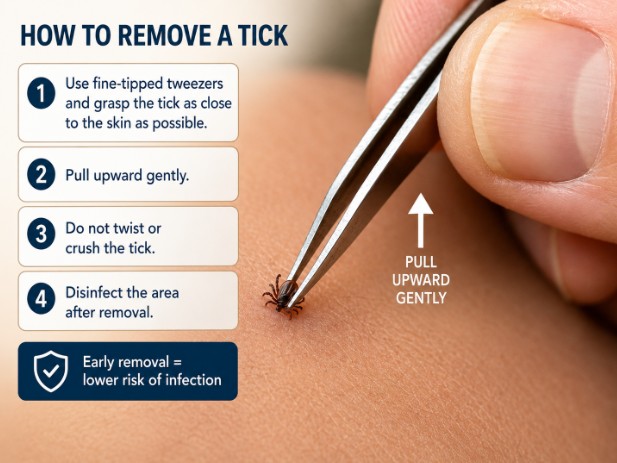
Use fine-tipped tweezers:
- grasp the tick as close to the skin as possible;
- pull gently upwards;
- avoid sudden movements or twisting;
- disinfect the area after removal.
Whenever possible, note the date of the bite to help with any subsequent medical assessment.
What should you not do?
❌ Do not crush the tick with your fingers.
❌ Do not use oil, alcohol, acetone, petroleum jelly, or other substances in an attempt to “suffocate” it.
❌ Do not burn it with a match or cigarette.
These methods may increase the risk of transmission of infectious agents.
Why do tick bites require attention?
The main concern is not the bite itself, but the possibility that some ticks may transmit infections.
The best known is Lyme disease, caused by a bacterium transmitted through the bite of certain tick species. In some parts of Europe, ticks may also transmit TBE, or tick-borne encephalitis, a viral infection for which an effective vaccine is available.
The risk of transmission increases the longer the tick remains attached to the skin.
What symptoms may develop?
In most cases, a tick bite causes no consequences.
However, after a tick bite, it is advisable to monitor the skin and your general health for approximately one month and watch for the possible appearance of:
- a reddish patch that gradually expands, known as erythema migrans;
- fever;
- unusual tiredness;
- muscle or joint pain;
- headache.
Erythema migrans is one of the most characteristic signs of Lyme disease.
How can tick bites be prevented?
Prevention is particularly important during hikes and outdoor activities.
🧴 Apply repellents containing DEET, or diethyltoluamide, to exposed skin.
👖 Treat clothing with permethrin-based products, which are particularly useful during hikes and activities in high-risk areas.
🥾 Wear closed shoes and long trousers.
👖 Tuck the bottoms of your trousers into your socks when hiking in high-risk areas.
🚿 Check your skin carefully when you return and take a shower as soon as possible.
🐕 Check pets as well, as they may carry ticks into the home.
When should you consult a doctor?
It is advisable to consult a doctor if:
- you are unable to remove the tick completely;
- an expanding patch develops around the bite;
- fever or flu-like symptoms appear;
- joint pain or neurological symptoms develop in the following weeks.
Did you know…?
The sooner a tick is removed, the lower the risk of transmission of certain infections.
This is why it is important to check the skin after hikes and walks in natural areas.
A tick can be as small as a sesame seed.
During its immature stages, it may be so small that it can easily go unnoticed.
In summary
📍 Where? Meadows, woodlands, countryside, and walking trails.
📍 When? From spring to autumn.
📍 Main symptom of the bite? Often none.
📍 Main risk? Transmission of infections such as Lyme disease.
📍 First aid? Correct and prompt removal of the tick.
📍 Prevention? Appropriate clothing, repellents, and checking the skin after outdoor activities.
Concerns after a tick bite?
In most cases, no specific treatment is required. However, if the tick remained attached for a long time, if unusual symptoms develop, or if you are unsure whether it was removed correctly, a medical assessment may be helpful.
The Dermatology, Infectious Diseases, Internal Medicine, and Paediatrics specialists at Aventino Medical Group can assist adults and children with the management and monitoring of tick bites.