
Small bites, major discomfort
Article prepared by the specialists of Aventino Medical Group.
Scientific review: Dr Megon Bresciani, Specialist in Allergology; Dr Paola Groff, Specialist in Paediatrics.
Mosquito bites
For many people, mosquitoes are simply a summer nuisance. In fact, they are the insects that most frequently come into contact with humans during the warmer months, causing millions of bites every year.
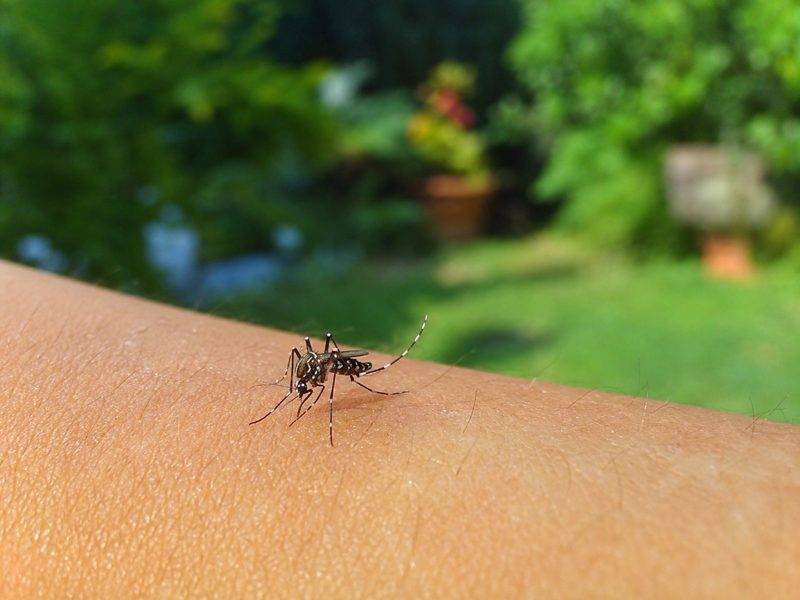
In recent decades, the Asian tiger mosquito (Aedes albopictus) has spread throughout much of Italy alongside the common mosquito. It is easily recognisable by the distinctive black-and-white stripes on its legs and body.
Where are they found?
Mosquitoes need water to reproduce and can breed in even very small amounts of it.
They are frequently found:
- in gardens;
- in urban parks;
- on terraces and balconies;
- near plant saucers and buckets;
- in areas with stagnant water;
- along rivers, lakes, and wetlands.
The common mosquito is particularly active from dusk until dawn, whereas the Asian tiger mosquito mainly bites during the daytime, with peaks in activity during the early morning and late afternoon.

How does a mosquito bite?
Only female mosquitoes bite, as they use blood as a source of nutrients for the development of their eggs.
When biting, the mosquito injects a small amount of saliva containing anticoagulant substances into the skin. It is this saliva that triggers the inflammatory reaction responsible for the itching.
What symptoms do mosquito bites cause?
In most cases, the following symptoms appear:
- itching;
- redness;
- a small, localised swelling;
- discomfort lasting from a few hours to several days.
Children and people who are allergic or particularly sensitive may experience more pronounced reactions, with extensive and persistent swelling.
Children with atopic conditions, for example, may develop particularly noticeable local reactions, with red and swollen areas that can reach several centimetres in diameter and persist for a few days.
What about horseflies?
A horsefly does not sting: it bites, superficially tearing the skin in order to feed on blood. This is why a horsefly bite is often more painful than a mosquito bite.
It may cause immediate pain, redness, swelling, itching, and sometimes a small superficial wound. In most cases, it causes an unpleasant but harmless local reaction.
More rarely, extensive swelling or allergic reactions may occur and require medical assessment.
Why are some people bitten more than others?
Many people feel that they are mosquitoes’ “favourite victims”, and this is partly true.
Mosquitoes are attracted by:
- the carbon dioxide released through breathing;
- body temperature;
- perspiration;
- certain natural skin odours.
For this reason, some people are bitten much more frequently than others, even when they are in the same environment.
When should you be concerned?
In most cases, mosquito bites are harmless.
It is advisable to consult a doctor if:
- the swelling becomes very extensive;
- an infection develops as a result of scratching;
- general symptoms such as fever or feeling unwell appear;
- signs of an allergic reaction develop.
🦟 Can mosquitoes in Italy transmit diseases?
For most people in Italy, mosquito bites remain nothing more than a minor local nuisance.
However, the Asian tiger mosquito is closely monitored by public health authorities because it can transmit certain viruses, including chikungunya, dengue, and Zika, after biting an infected person and subsequently biting other people.
The disease most frequently associated with the Asian tiger mosquito in Italy is chikungunya. The name of this viral disease literally means “that which bends”, referring to the severe joint pain that can characterise it.
Its main symptoms include:
- sudden high fever;
- severe joint pain;
- muscle pain;
- headache;
- marked fatigue;
- a possible skin rash.
In most cases, people recover spontaneously, although joint pain may persist for several weeks or, more rarely, for several months.
Fortunately, the risk for people living or spending a holiday in Italy remains low and should not cause alarm.
However, it is advisable to consult a doctor if high fever, severe joint pain, or unusual symptoms develop after numerous mosquito bites or following a trip to a tropical or subtropical country.
💡 Good to know: the presence of the Asian tiger mosquito is one of the reasons why mosquito-control programmes and the elimination of stagnant water are considered important public health measures.
What should you do after a mosquito bite?
✅ Applying a cold compress can quickly reduce itching and swelling.
The following may be helpful:
- soothing creams;
- antihistamine gels;
- oral antihistamines for more severe reactions.
The most important rule, however, is to avoid scratching, as scratching encourages inflammation and secondary infections.
How can mosquito bites be prevented?
Prevention is the most effective strategy.
🧴 Use suitable insect repellents on the skin.
👕 Wear lightweight clothing that covers the skin during the times of day when mosquitoes are most active.
🪟 Install mosquito screens in the home.
💧 Remove stagnant water from plant saucers, watering cans, and outdoor containers.
👶 For young children, it is preferable to use mosquito netting over pushchairs and cots rather than relying exclusively on insect repellents.

Did you know…?
Only female mosquitoes bite. They need the proteins found in blood to support the maturation of their eggs.
A mosquito can detect a person from dozens of metres away. Carbon dioxide, body heat, and skin odours help it locate its target.
In summary
📍 Where? Gardens, parks, terraces, balconies, and areas with stagnant water.
📍 When? From spring to autumn.
📍 Main symptom? Itching and localised swelling.
📍 Main risk? Inflammatory reactions and, rarely, the transmission of viruses such as chikungunya.
📍 First aid? Cold compresses and soothing creams.
📍 Prevention? Insect repellents, mosquito screens, and the elimination of stagnant water.
Concerns after an insect bite?
Book an appointment with one of the Aventino Medical Group specialists directly online.