
The Mediterranean Sea’s Most Common Marine Encounter
Article prepared by the specialists of Aventino Medical Group.
Scientific review: Dr. Megon Bresciani, Specialist in Allergology; Dr. Paola Groff, Specialist in Pediatrics.
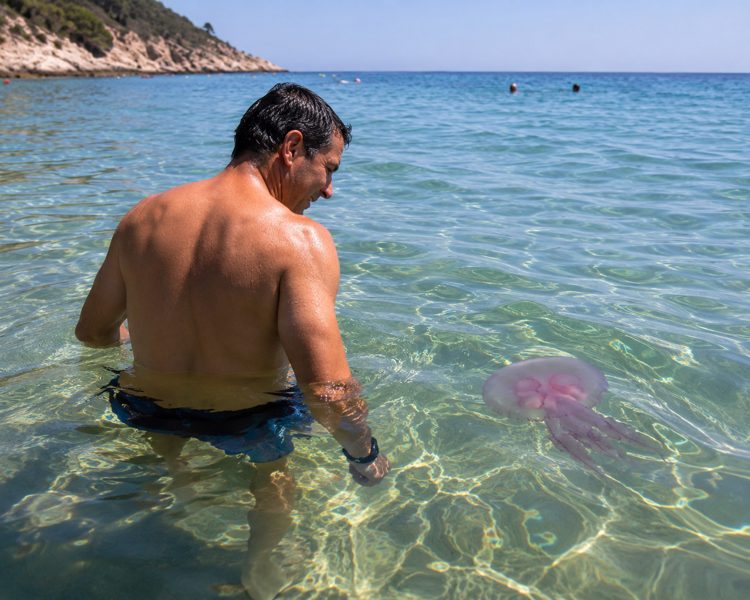
A refreshing swim in crystal-clear waters, a calm summer day at the beach, and suddenly an intense burning sensation on your skin: jellyfish stings are among the most common summer hazards along the Italian coastline.
Fortunately, in most cases they are not serious. However, understanding how jellyfish behave and knowing the correct first-aid measures can significantly reduce pain and help prevent complications.
Where are jellyfish found?
Jellyfish are a natural part of the Mediterranean marine ecosystem and can be found along all Italian coastlines.
They are more commonly encountered:
- on calm sea days;
- when currents are favourable;
- inside sheltered bays;
- close to the water surface;
- after periods of particularly warm weather.
Some species are carried close to the shore by winds or sea currents, increasing the likelihood of contact with swimmers.
Even a jellyfish that appears dead after being washed ashore may still have active stinging cells for several hours.
How does a jellyfish sting occur?
Contrary to popular belief, jellyfish do not intentionally sting people.
When the skin comes into contact with their tentacles, thousands of microscopic stinging cells called nematocysts are triggered, releasing irritating substances into the skin.
The severity of the reaction depends on several factors:
- the jellyfish species;
- the extent of skin contact;
- the duration of exposure;
- the individual’s sensitivity.
What symptoms does it cause?
Symptoms usually appear immediately after contact.
The most common signs include:
- intense burning pain;
- pain;
- redness;
- linear or whip-like skin lesions;
- itching;
- localized swelling.
The skin lesion often resembles the mark left by a whip, following the path of the tentacle.
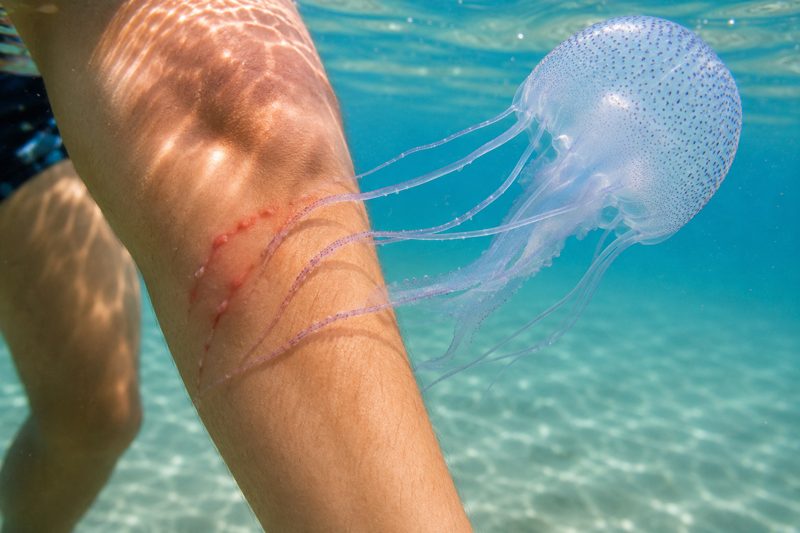
In the following days, some symptoms may persist, including:
- itching;
- increased skin sensitivity;
- temporary changes in skin pigmentation.
When should you seek medical advice?
In most cases, the reaction remains limited to the affected area.
However, you should consult a doctor if:
- the affected area is very large;
- the pain is particularly severe;
- the sting involves the face or the eyes;
- general symptoms develop;
- the person stung is a young child.
🌊 Are Mediterranean jellyfish dangerous?
Most jellyfish species found in Italian waters cause mainly pain, burning sensations and skin irritation.
Serious complications are uncommon.
However, some individuals may develop more significant reactions, including:
- widespread hives;
- nausea;
- dizziness;
- difficulty breathing;
- allergic reactions.
The risk increases after extensive contact with the tentacles or in particularly sensitive individuals.
💡 Good to know: Most jellyfish stings occurring on Italian beaches do not cause permanent damage and resolve completely within a few days.
What should you do after a jellyfish sting?
✅ Leave the water calmly.
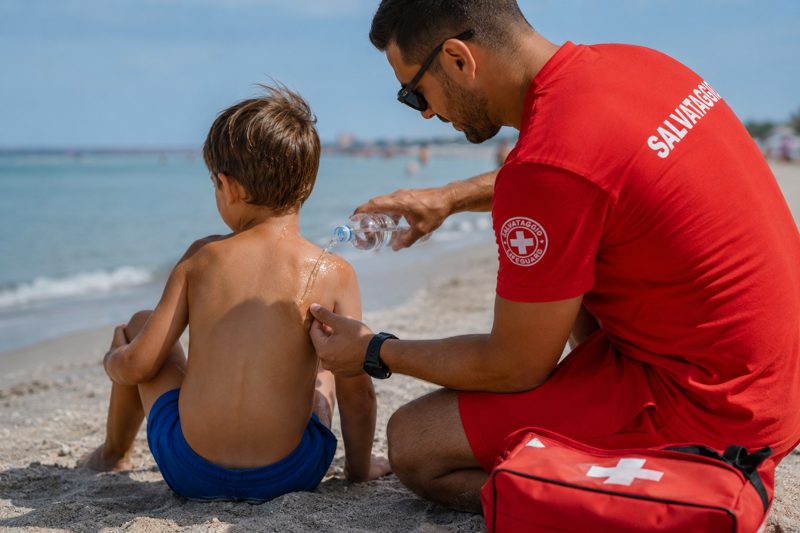
✅ Rinse the affected area only with seawater.
✅ Carefully remove any visible tentacle fragments using a rigid object (such as the edge of a card) or fine tweezers.
✅ Apply cold compresses wrapped in a cloth.
If necessary, a doctor may recommend specific creams or medications to relieve pain and reduce inflammation.
What should you NOT do?
❌ Do not rinse the affected area with fresh water.
❌ Do not rub the skin with sand or towels.
❌ Do not scratch the lesion.
❌ Do not apply improvised home remedies unless recommended by a healthcare professional.
These actions may trigger additional nematocysts to discharge, worsening the skin reaction and increasing discomfort.
How can you prevent jellyfish stings?
Although prevention is not always possible, a few simple precautions can significantly reduce the risk.
🏖️ Check sea conditions before entering the water.
👀 Pay attention to lifeguard warnings and beach safety notices.
🤿 Wear a protective swim shirt or a lightweight wetsuit during prolonged swimming or water sports.
🌊 Avoid touching jellyfish, whether they are floating in the water or washed up on the beach.
👶 Closely supervise children in areas where jellyfish have been reported.
Did you know?
Jellyfish existed long before dinosaurs.
They have inhabited the world’s oceans for hundreds of millions of years and are among the oldest living organisms still found on Earth today.
Jellyfish have no brain, no heart and no bones.
Yet they are still able to move, orient themselves and respond to changes in their marine environment.
In summary
📍 Where? Open sea, sheltered bays and coastal waters.
📍 When? Most commonly during the summer months and on calm sea days.
📍 Main symptom? Immediate burning sensation with redness of the skin.
📍 Main risk? Severe pain, extensive skin irritation and allergic reactions in susceptible individuals.
📍 First aid? Rinse with seawater, remove any remaining tentacles and apply cold compresses.
📍 Prevention? Pay attention to beach warnings, avoid contact with jellyfish and wear protective clothing during water activities.
Concerned after a sting or bite?
If the pain is severe, your symptoms worsen, or you develop difficulty breathing, feel generally unwell, or experience other significant symptoms, go to the nearest Emergency Department.
For non-urgent concerns, you can book an appointment at Aventino Medical Group.