
Pain, swelling or allergy?
Article prepared by the specialists of Aventino Medical Group.
Scientific review: Dr Megon Bresciani, Allergy Specialist; Dr Alessandro Cristaudo, Internal Medicine Specialist.
A sugary drink left on the table, an ice cream eaten on the beach or a picnic in the countryside: bees, wasps and hornets are part of the Italian summer and, in most cases, coexist peacefully with people.
Stings are very common during the warmer months and generally cause only localised pain and swelling. In some situations, however, they can become a genuine medical emergency.
Where are they found?
Bees, wasps and hornets are found throughout much of Italy.
They are frequently encountered:
- in gardens and parks;
- in rural and agricultural areas;
- near flowers and fruit trees;
- at outdoor markets;
- during picnics, barbecues and outdoor meals;
- near nests built under roofs, gutters and balconies or inside tree cavities.
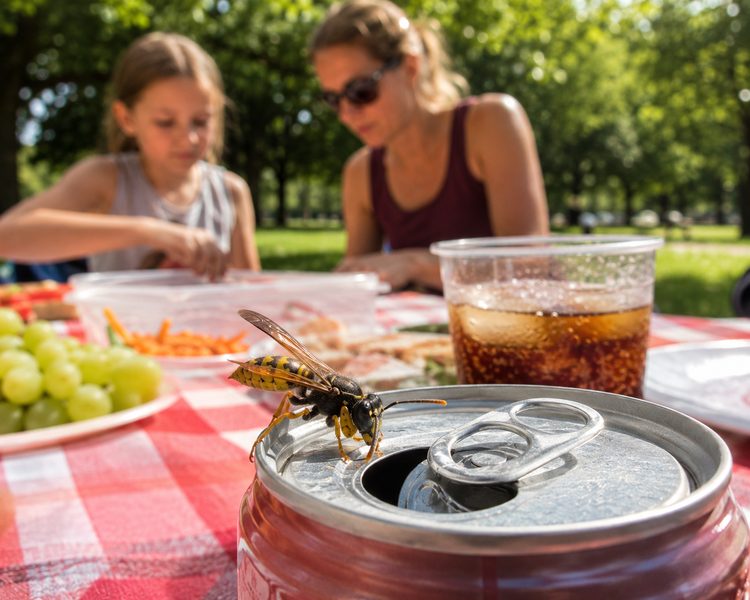
Wasps and hornets are particularly attracted to:
- sugary drinks;
- ripe fruit;
- ice cream;
- meat and food left outdoors.
What is the difference between a bee, a wasp and a hornet?
🐝 A bee tends to sting only in self-defence. After stinging, it leaves its stinger in the skin and generally dies.
🐝 A wasp is more aggressive and can sting repeatedly without losing its stinger.
🐝 A hornet is larger than a wasp and often causes concern because of its size, but it is not necessarily more aggressive. Its sting can, however, be particularly painful.
How does a sting occur?
Stinging is a defensive mechanism used by the insect.
It may occur:
- when someone tries to swat the insect away suddenly;
- when approaching a nest;
- when walking barefoot on grass;
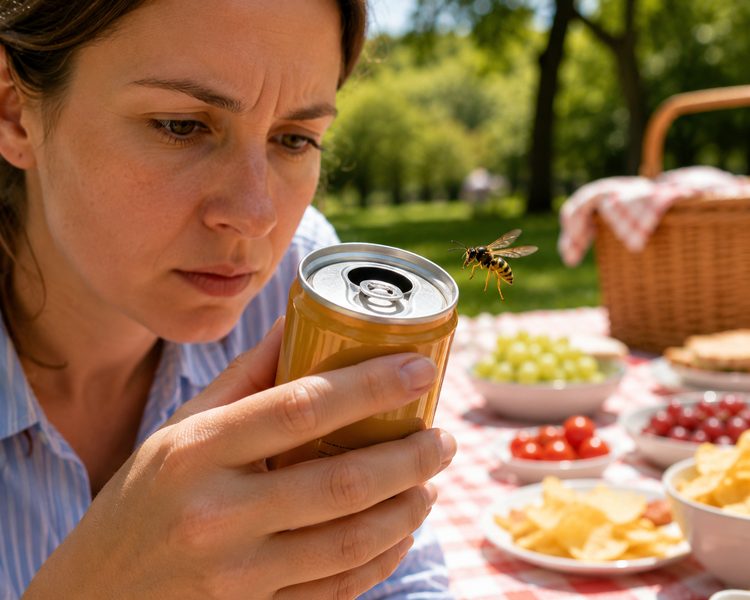
- when accidentally drinking from a can or glass that a wasp has entered;
- when driving with the car windows open.
During the sting, venom is injected into the skin, causing an immediate inflammatory reaction.
What symptoms do they cause?
In most cases, the following symptoms occur:
- immediate and intense pain;
- redness;
- localised swelling;
- a burning sensation.
Symptoms tend to improve within a few hours or days.
In children, the swelling may appear particularly noticeable, especially when the sting affects the hands, feet or face.
When should you be concerned?
Certain situations require particular attention.
⚠️ Multiple stings
Receiving numerous stings at the same time increases the amount of venom injected and may cause general symptoms even in people who are not allergic.
⚠️ Stings inside the mouth or throat
These can cause swelling that obstructs the airway and require urgent medical assessment.
⚠️ Allergic reactions
In sensitised individuals, even a single sting may cause a severe allergic reaction known as anaphylaxis. Particular concern is required when breathing symptoms or a feeling of faintness occur in addition to swelling at the site of the sting.
🚑 When does a sting become an emergency?
Emergency services must be called immediately, or the person must go to the Emergency Department, if any of the following occur:
- difficulty breathing;
- a feeling of tightness in the throat;
- swelling of the lips, tongue or face;
- widespread hives;
- dizziness or loss of consciousness;
- repeated vomiting;
- a severe drop in blood pressure.
These symptoms may develop within a few minutes of the sting and require immediate treatment.
💡 Good to know: people who have previously experienced a serious allergic reaction should always carry the adrenaline auto-injector prescribed by their doctor.
What should you do after a sting?
✅ If a stinger is present, as may occur after a bee sting, it should be removed as quickly as possible.
It should be removed gently, taking care not to squeeze the venom sac further.
The following measures may be helpful:
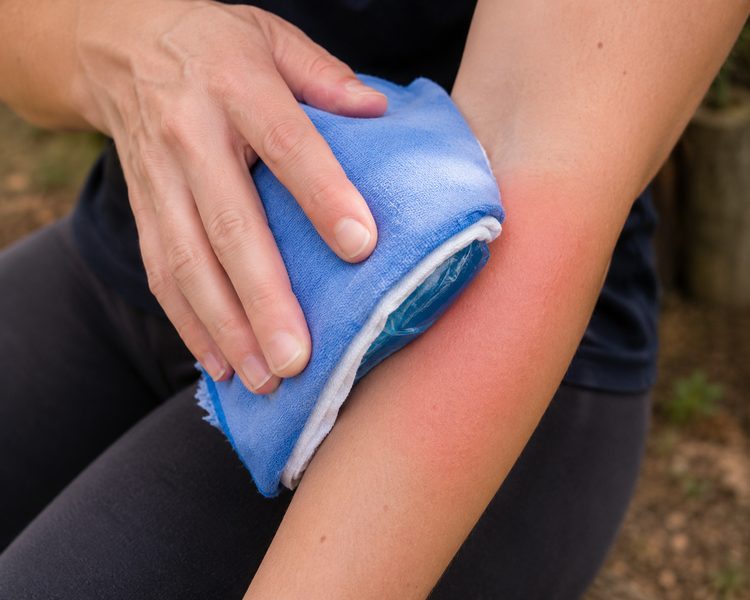
- cold compresses;
- raising the affected limb;
- soothing creams;
- antihistamines, if recommended by a doctor;
- topical or oral corticosteroids, only when prescribed by a doctor.
Ice should not be applied directly to the skin but wrapped in a cloth.
In the event of a serious allergic reaction, difficulty breathing, facial swelling or general symptoms, do not wait for medication taken at home to work. Call the emergency services immediately or go to the Emergency Department.
How can stings be prevented?
Prevention is particularly important during outdoor activities.
🥤 Always check glasses and cans before drinking.
👟 Avoid walking barefoot on grass.
🍉 Cover food and drinks during outdoor meals.
👕 Choose neutral-coloured clothing and avoid particularly strong perfumes during hikes or picnics.
🚗 When driving, keep the windows closed in areas where bees, wasps and hornets are particularly common.
🤲 When bees or wasps are nearby, avoid sudden movements and do not try to crush them.
Did you know?
Only bees almost always leave their stinger in the skin.
Wasps and hornets can sting several times without losing their stinger.
An allergic reaction can develop even after years of stings without any previous problems.
Breathing difficulties, facial swelling or widespread hives should therefore never be underestimated.
Unsure what to do after a sting?
In most cases, pain and swelling resolve spontaneously. However, if significant symptoms, extensive reactions or doubts about the nature of the reaction occur, a medical assessment can help distinguish a normal inflammatory response from an allergic reaction.
The Allergy, Internal Medicine, Dermatology and Paediatrics specialists at Aventino Medical Group are available to assess and manage insect stings in adults and children.
In summary
📍 Where? Gardens, countryside, parks and areas where food is eaten outdoors.
📍 When? Mainly from late spring to early autumn.
📍 Main symptom? Immediate pain with redness and swelling.
📍 Main risk? Allergic reactions and stings in critical areas such as the mouth or throat.
📍 First aid? Remove the stinger, apply a cold compress and monitor the symptoms.
📍 Prevention? Pay attention to food and drinks, avoid sudden movements and do not walk barefoot.
Unsure what to do after a sting or bite?
If you experience difficulty breathing, widespread swelling, or any other signs of a severe allergic reaction, call the emergency services (112/118) or go to the nearest Emergency Department immediately.
For non-urgent concerns, you can book an appointment at Aventino Medical Group.