
The caterpillar you should never touch
Article prepared by the specialists at Aventino Medical Group.
Scientific review: Dr Megon Bresciani, Specialist in Allergology; Dr Paola Groff, Specialist in Paediatrics.
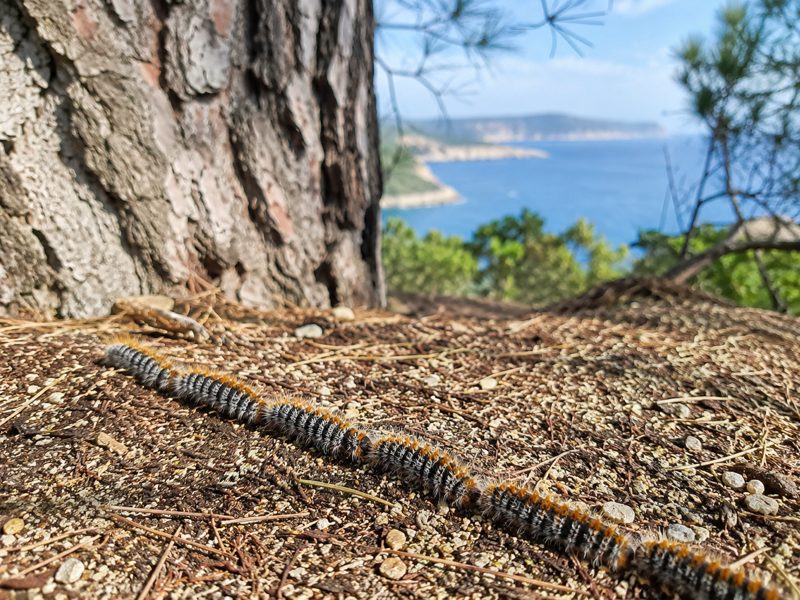
The pine processionary is a caterpillar known for its distinctive way of moving: the caterpillars often travel in a line, one behind the other, forming a true “procession”.
It is important to recognise this caterpillar because, although it does not sting or bite, it is covered with urticating hairs that can cause severe irritation to the skin, eyes and respiratory tract.
Where is it found?
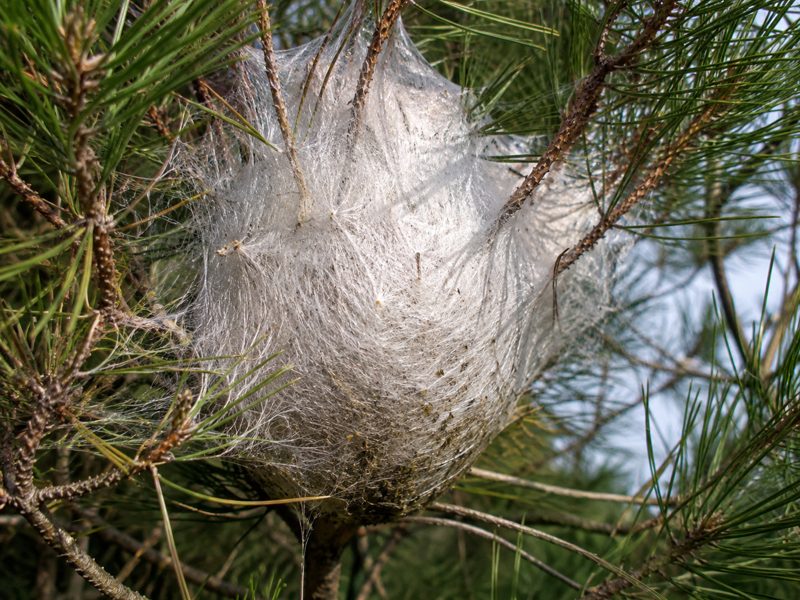
The pine processionary caterpillar is mainly found near pine trees, where it builds clearly visible whitish, cotton-like nests among the branches.
It may be encountered:
- in parks;
- in gardens;
- in pine forests;
- along paths and in green areas;
- near schools, villas and residential areas with pine trees.
The caterpillars descend from the trees and move across the ground, often in a line, especially from late winter through spring. However, the risk of exposure to their urticating hairs may persist during the following months.
Why is it dangerous?
The problem is not a bite, but contact with the urticating hairs.
These hairs are extremely small, invisible to the naked eye and equipped with tiny hooks that allow them to cling easily to the skin and mucous membranes.
They can:
- detach easily from the caterpillar;
- remain in the environment;
- be carried by the wind;
- settle on clothing, skin, eyes or mucous membranes.
For this reason, direct contact with the caterpillar is not necessary for a reaction to occur.
What symptoms can it cause?
Contact with the urticating hairs may cause:
- severe itching;
- redness;
- wheals or dermatitis;
- a burning sensation;
- eye irritation;
- watery eyes;
- coughing;
- throat irritation;
- difficulty breathing in sensitive individuals.
Children may be particularly curious about the caterpillars moving in a line and are therefore at greater risk of directly touching them with their hands or coming into contact with them on the face and around the eyes.
🌲 What happens after exposure to pine processionary caterpillars?
Once they penetrate the tissues, the urticating hairs release irritating substances that can trigger a sometimes very intense inflammatory reaction.
Skin contact
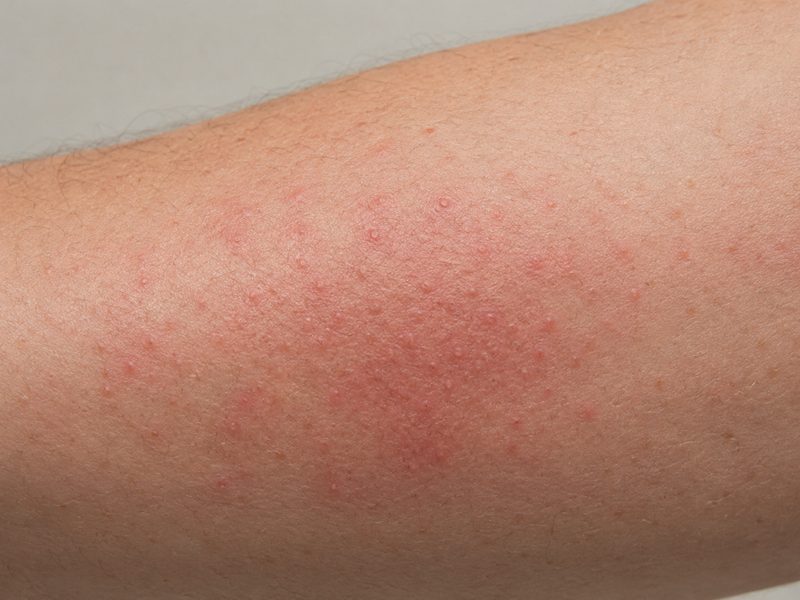
The most common reaction is irritant dermatitis characterised by:
- severe itching;
- redness;
- small wheals;
- a burning sensation or the feeling of multiple stings.
Symptoms may appear within a few minutes or several hours later. They mainly affect exposed areas such as the arms, legs, neck and face.
In children, the itching may be particularly intense and lead to scratching, increasing the risk of a secondary skin infection.
Eye contact
If the hairs enter the eyes, they may cause:
- redness;
- watering;
- pain;
- a foreign-body sensation;
- photophobia, meaning discomfort or sensitivity to light.
In these cases, it is important not to rub the eyes and to seek medical advice, as the hairs may remain trapped in the conjunctiva.
Inhalation of urticating hairs
When carried by the wind, the hairs may be inhaled.
Symptoms may include:
- sneezing;
- coughing;
- throat irritation;
- hoarseness;
- a sensation of tightness in the airways.
People with asthma or respiratory allergies may develop more pronounced symptoms.
Contact with the mouth and mucous membranes
More rarely, particularly in young children, the hairs may enter the mouth.
In this case, they may cause:
- severe burning;
- swelling of the lips;
- irritation of the tongue;
- difficulty swallowing.
Can allergic reactions occur?
Yes, although they are uncommon.
In predisposed individuals, exposure may cause:
- widespread hives;
- facial swelling;
- difficulty breathing;
- generalised allergic reactions.
If any of these symptoms occur, immediate assessment at an Emergency Department is necessary.
💡 Good to know: many people believe that there is a risk only when the caterpillar is touched. In reality, on windy days symptoms may develop even without direct contact, simply by spending time near infested trees.
Be careful with pets
Dogs and cats, especially dogs, are particularly at risk because they may sniff or lick the caterpillars.
In dogs, exposure may cause:
- excessive salivation;
- swelling of the tongue;
- pain;
- difficulty swallowing;
- potentially serious damage to the lining of the mouth.
In these cases, a veterinarian should be contacted immediately.
What should you do after exposure?
✅ Move away from the affected area.
✅ Avoid scratching or rubbing the skin.
✅ Remove contaminated clothing and wash it.
✅ Rinse the skin thoroughly with plenty of water.
✅ If the eyes are affected, rinse them with sterile saline solution.
✅ Consult a doctor if the symptoms are severe or if the eyes, mouth or respiratory tract are involved.
What should you NOT do?
❌ Do not touch the caterpillars.
❌ Do not crush pine processionary caterpillars.
❌ Do not handle their nests.
❌ Do not scratch irritated skin.
❌ Do not allow children or pets to approach them.
The nests must be removed by specialised professionals.
How can exposure be prevented?
Prevention mainly involves recognising the risk.
🌲 Look for white nests in pine trees.
🚸 Supervise children in parks and pine forests.
🐕 Keep dogs on a lead in areas where there may be a risk.
👀 Avoid areas where infestations have been reported.
🏡 Report nests found in public spaces or shared residential areas.
Did you know?
Even when pine processionary caterpillars are no longer visible, their urticating hairs may remain in the environment.
During the summer, exposure may occur through residues left on abandoned nests, tree bark, the ground or pine needles. For this reason, nests or suspicious material found beneath pine trees should never be touched.
The pine processionary spends almost its entire life as a caterpillar and only a few days as an adult moth.
After the eggs hatch, the caterpillar lives on pine trees for approximately seven to nine months. It then burrows into the ground and develops into a pupa, a stage that may last from several weeks to several months. The adult moth emerges during the summer and generally lives for less than a week, just long enough to mate and lay its eggs.
In summary
📍 Where? Pine forests, parks, gardens and areas with pine trees.
📍 When? Mainly from late winter through spring, although the urticating hairs may persist in the environment.
📍 Main symptoms? Itching, dermatitis and irritation of the eyes or respiratory tract.
📍 Main risk? Contact with the skin, eyes or mouth, or inhalation of the urticating hairs.
📍 First aid? Wash the affected area, do not rub it and remove contaminated clothing.
📍 Prevention? Do not touch caterpillars or nests, and supervise children and pets.
Concerns after a sting or bite?
Book an appointment with one of the specialists at Aventino Medical Group directly online.