News

what bit me bees wasps and hornets
News

Wasp, bee or hornet sting: what to do immediately, allergy symptoms and when to go to the Emergency Department

Pain, swelling or allergy? Article prepared by the specialists of Aventino Medical Group.Scientific review: Dr Megon Bresciani, Allergy Specialist; Dr Alessandro Cristaudo, Internal Medicine Specialist. A sugary drink left on the table, an ice cream eaten on the beach or a picnic in the countryside: bees, wasps and hornets are part of the Italian summer and, in most cases, coexist peacefully with people. Stings are very common during the warmer months and generally cause only localised pain and swelling. In some situations, however, they can become a genuine medical emergency. Where are they found? Bees, wasps and hornets are found throughout much of Italy. They are frequently encountered: Wasps and hornets are particularly attracted to: What is the difference between a bee, a wasp and a hornet? 🐝 A bee tends to sting only in self-defence. After stinging, it leaves its stinger in the skin and generally dies. 🐝 A wasp is more aggressive and can sting repeatedly without losing its stinger. 🐝 A hornet is larger than a wasp and often causes concern because of its size, but it is not necessarily more aggressive. Its sting can, however, be particularly painful. How does a sting occur? Stinging is a defensive mechanism used by the insect. It may occur: During the sting, venom is injected into the skin, causing an immediate inflammatory reaction. What symptoms do they cause? In most cases, the following symptoms occur: Symptoms tend to improve within a few hours or days. In children, the swelling may appear particularly noticeable, especially when the sting affects the hands, feet or face. When should you be concerned? Certain situations require particular attention. ⚠️ Multiple stings Receiving numerous stings at the same time increases the amount of venom injected and may cause general symptoms even in people who are not allergic. ⚠️ Stings inside the mouth or throat These can cause swelling that obstructs the airway and require urgent medical assessment. ⚠️ Allergic reactions In sensitised individuals, even a single sting may cause a severe allergic reaction known as anaphylaxis. Particular concern is required when breathing symptoms or a feeling of faintness occur in addition to swelling at the site of the sting. 🚑 When does a sting become an emergency? Emergency services must be called immediately, or the person must go to the Emergency Department, if any of the following occur: These symptoms may develop within a few minutes of the sting and require immediate treatment. 💡 Good to know: people who have previously experienced a serious allergic reaction should always carry the adrenaline auto-injector prescribed by their doctor. What should you do after a sting? ✅ If a stinger is present, as may occur after a bee sting, it should be removed as quickly as possible. It should be removed gently, taking care not to squeeze the venom sac further. The following measures may be helpful: Ice should not be applied directly to the skin but wrapped in a cloth. In the event of a serious allergic reaction, difficulty breathing, facial swelling or general symptoms, do not wait for medication taken at home to work. Call the emergency services immediately or go to the Emergency Department. How can stings be prevented? Prevention is particularly important during outdoor activities. 🥤 Always check glasses and cans before drinking. 👟 Avoid walking barefoot on grass. 🍉 Cover food and drinks during outdoor meals. 👕 Choose neutral-coloured clothing and avoid particularly strong perfumes during hikes or picnics. 🚗 When driving, keep the windows closed in areas where bees, wasps and hornets are particularly common. 🤲 When bees or wasps are nearby, avoid sudden movements and do not try to crush them. Did you know? Only bees almost always leave their stinger in the skin.Wasps and hornets can sting several times without losing their stinger. An allergic reaction can develop even after years of stings without any previous problems.Breathing difficulties, facial swelling or widespread hives should therefore never be underestimated. Unsure what to do after a sting? In most cases, pain and swelling resolve spontaneously. However, if significant symptoms, extensive reactions or doubts about the nature of the reaction occur, a medical assessment can help distinguish a normal inflammatory response from an allergic reaction. The Allergy, Internal Medicine, Dermatology and Paediatrics specialists at Aventino Medical Group are available to assess and manage insect stings in adults and children. In summary 📍 Where? Gardens, countryside, parks and areas where food is eaten outdoors.📍 When? Mainly from late spring to early autumn.📍 Main symptom? Immediate pain with redness and swelling.📍 Main risk? Allergic reactions and stings in critical areas such as the mouth or throat.📍 First aid? Remove the stinger, apply a cold compress and monitor the symptoms.📍 Prevention? Pay attention to food and drinks, avoid sudden movements and do not walk barefoot. Unsure what to do after a sting or bite? If you experience difficulty breathing, widespread swelling, or any other signs of a severe allergic reaction, call the emergency services (112/118) or go to the nearest Emergency Department immediately. For non-urgent concerns, you can book an appointment at Aventino Medical Group.

what bit me a practical guide to summer bites and stings in Italy
News

Summer Stings and Bites in Italy: How to Recognise Them and When to Worry

Small Summer Encounters, Big Questions About Your Skin Article prepared by the doctors of Aventino Medical Group: Luigi Cornacchia, Dermatology Specialist; Megon Bresciani, Allergy Specialist; Guido Castelli Gattinara, Infectious Diseases Specialist; Paola Groff, Paediatrics Specialist; Alessandro Cristaudo, Internal Medicine Specialist. Summer in Italy is synonymous with holidays, walks in nature, days at the seaside and outdoor activities. However, it is precisely in the most beautiful places of the season that people may come into contact with insects, marine animals or other organisms capable of causing stings, bites or skin irritation. In most cases, these are unpleasant but harmless episodes that resolve spontaneously within a few days. In some situations, however, it is important to recognise quickly the warning signs that require medical assessment. How can you tell whether it is a simple mosquito bite or something that deserves greater attention? Which mistakes should be avoided? And when is it necessary to consult a doctor? This guide provides an overview of the main risks associated with summer in Italy and will help you understand quickly what to do. At a glance: what might have stung or bitten you?  If you notice… It could be… What to do immediately An itchy raised bump Mosquito Apply something cold and avoid scratching A tick attached to the skin Tick Remove it correctly Severe pain and immediate swelling Bee, wasp or hornet Apply ice and monitor the symptoms Red streaks and burning after swimming Jellyfish Rinse with seawater Very severe pain in the foot while in the sea Weever fish Immerse the foot in hot water Two small puncture marks with increasing swelling Viper Keep the affected area still and go to the Emergency Department Itching and dermatitis after contact with caterpillars or pine trees Pine processionary caterpillar Wash the affected area thoroughly A skin lesion that worsens over the following days Possible Mediterranean recluse spider bite Seek medical assessment The Most Common Insect Stings and Bites Insect stings and bites are undoubtedly the most common summer problem. Mosquitoes generally cause itching and small areas of localised swelling, whereas bees, wasps and hornets cause immediate pain and a more noticeable inflammatory reaction. For most people, the problem remains limited to the affected area. However, some individuals may develop severe allergic reactions requiring urgent medical treatment. 👉 Learn more: Mosquito Bites and Tiger Mosquitoes: Remedies, Prevention and When to Consult a Doctor 👉 Learn more: Wasp, Bee or Hornet Sting: What to Do Immediately, Allergy Symptoms and When to Go to the Emergency Department Ticks: Small but Not to Be Underestimated Ticks are particularly common during hikes, walks in woodland areas or activities in the countryside. Their bite is generally painless and often goes unnoticed. The reason they require attention is their ability to transmit certain infections, including Lyme disease, which must be treated with antibiotics. Early and correct removal of the tick is the most important measure. 👉 Learn more: Tick Bite: What to Do, How to Remove a Tick and Symptoms of Lyme Disease Hazards at Sea: Jellyfish and Weever Fish The Mediterranean Sea offers wonderful opportunities for leisure, but it can also hold a few surprises. Jellyfish are responsible for many episodes of burning and skin irritation during the summer. Fortunately, in most cases they cause only local symptoms. The weever fish is less well known, but it can cause extremely severe pain when accidentally stepped on in shallow sandy waters. 👉 Learn more: Jellyfish Sting: What to Do Immediately, Effective Remedies and Mistakes to Avoid 👉 Learn more: Weever Fish Sting: What to Do Immediately, Symptoms and Remedies for Pain The Animals That Cause the Most Fear When people think about summer bites, vipers and spiders are probably the animals that cause the greatest concern. In reality, both the Mediterranean recluse spider and the viper tend to avoid contact with humans, and accidents are relatively uncommon. This does not mean that they should be underestimated: knowing the symptoms and understanding how to respond can make an important difference. 👉 Learn more: Viper Bite: Symptoms, What to Do Immediately and When to Go to the Emergency Department 👉 Learn more: Mediterranean Recluse Spider and Black Widow Spider Bites: Symptoms, Pictures, What to Do and When to Worry Pine Processionary Caterpillars: A Risk Many People Do Not Know About The pine processionary caterpillar does not sting or bite, but it has tiny irritating hairs that can cause inflammation of the skin, eyes and respiratory tract. Children and pets are particularly exposed because they may be attracted by the distinctive caterpillars moving in a line. 👉 Learn more: Pine Processionary Caterpillars: Symptoms Affecting the Skin, Eyes and Respiratory Tract and What to Do After Contact When Should You Seek Medical Advice Quickly? Regardless of the animal involved, certain symptoms should always be taken seriously. A medical assessment is advisable if any of the following occur: A Small Useful Kit to Take on Holiday When spending a great deal of time outdoors, it may be useful to carry: People with severe allergies to insect stings should always carry the medication prescribed by their specialist. Frequently Asked Questions About Summer Stings and Bites How can you tell whether a sting or bite is dangerous? It is advisable to consult a doctor if there is difficulty breathing, swelling of the face, fever, significant pain or progressive worsening of the lesion. Which bites or stings can transmit diseases? In Italy, ticks represent the main infectious risk, while some mosquitoes may occasionally transmit viral diseases. When should you go to the Emergency Department? In the event of a severe allergic reaction, breathing difficulties, a viper bite, multiple stings or general symptoms such as dizziness and fainting. Are children at greater risk? Children spend more time outdoors and may notice stings or bites only after some time. It is therefore useful to check their skin after hikes, days at the seaside or activities in parks. Which animals most frequently cause problems during the summer? Mosquitoes, ticks, bees, wasps, hornets, jellyfish,

pack smart travel safe your summer health kit
News

Pack smart, travel safe: your summer health kit

Article written with the contribution of the pediatricians of Aventino Medical Group — Guido Castelli Gattinara, Paola Groff, Blegina Shashaj and Catherine Stainier — and the internists Alessandro Cristaudo and Gabriella Nataloni. A practical guide for city walks, beach holidays with children, mountain trips and international travel A summer trip is usually associated with relaxation, discovery and time spent outdoors. However, even a well-organized holiday can quickly become stressful because of fever, dehydration, insect bites, sunburn, minor injuries or forgotten medications. Preparing a simple and well-organized medical kit before departure can help manage many common situations more calmly, especially when travelling with children, elderly people or individuals with chronic conditions. The ideal travel medical kit may vary depending on the destination, age, medical history and planned activities. Here are some practical suggestions for different summer situations. The essential summer medical kit Before leaving, it is useful to prepare a small kit with essential items that can easily be carried during the trip. Essential summer medical kit What to bring Why it may be useful Thermometer To monitor fever accurately Disinfectant and sterile gauze and a small bottle of 2% eosin For small wounds and skin injuries Bandages and small dressings For cuts, scratches and minor accidents Saline solution For nose, eyes or gentle cleansing Insect repellent To reduce insect bites Appropriate sunscreen (Total barrier for younger children) To protect the skin from UV exposure After-sun lotion or soothing cream For mild redness or skin irritation Medication already known and well tolerated for pain or fever For fever, headache or pain Oral rehydration salts Useful in case of vomiting or diarrhea and possible dehydration Regularmedications in quantities appropriate to the period To avoid interruption of ongoing treatments Copies of prescriptions and essential medical documents Useful in case medical care is needed during the trip Keeping everything organized in a waterproof pouch can make it easier to access what is needed when necessary. A day in the mountains Mountain excursions often involve long walks, sun exposure, dehydration and minor injuries such as blisters or sprains. Even during summer, weather conditions can change quickly. What to add for the mountains What to add Practical usefulness Blister bandages For long walks and hiking shoes Elastic bandage For mild sprains or joint discomfort High-protection sunscreen (Total barrier for younger children) Sun exposure is stronger at high altitude Insect repellent Useful in wooded or grassy areas Water and snacks To prevent dehydration and fatigue Allergy medication, if already prescribed For known allergic reactions Antibiotic and cortisone ointment For insect bites and minor infections Phone charger or power bank Important in emergencies Local emergency numbers To know quickly who to contact if needed Even at high altitude, sun exposure should never be underestimated, especially for children and people with fair skin. Beach holidays with children Beach holidays with children often involve heat, sun exposure, mild skin irritation, ear discomfort, fever or gastrointestinal symptoms related to travel and changes in routine. Beach holidays with children What to bring Why it is important Pediatric sunscreen (Total barrier for younger children) Children’s skin requires specific protection Hat and UV-protective clothing To reduce direct sun exposure Saline solution Useful for nose, eyes or gentle cleansing Thermometer To monitor fever Oral rehydration salts and probiotics Useful in case of vomiting or diarrhea and possible dehydration Child-appropriate medication for fever or pain, according to the pediatrician’s advice To manage fever or discomfort safely Soothing cream for skin irritation For redness, chafing or mild irritation Prescribed allergy or asthma medication, if needed To avoid being unprepared during the trip Antibiotic and cortisone ointment For insect bites and minor infections Young children can become dehydrated more quickly during hot weather, making hydration and sun protection especially important. A week abroad Travelling abroad requires additional preparation, especially regarding continuity of care, prescriptions and access to healthcare services. ✈ What to add for international travel What to add Why it is important Regular medications in sufficient quantity To cover the entire trip Prescriptions in English, if possible Useful in pharmacies or medical centers abroad Health insurance information To facilitate access to healthcare List of allergies, medical conditions and ongoing medications Essential in emergencies Basic over-the-counter medications already familiar to the traveler To avoid unfamiliar products abroad Oral rehydration solution and probiotics Useful in case of vomiting or diarrhea and possible dehydration Emergency numbers and address of a reliable medical facility at the destination To know where to go if needed In some countries, medications may have different names or may not be easily available. When to seek medical advice Medical assistance should be sought if symptoms become severe, persistent or unusual during the trip. This includes: A well-prepared trip begins before departure A carefully prepared medical kit cannot prevent every problem, but it can make travel safer, easier and less stressful for both adults and children. Before leaving — especially with children, elderly people or individuals with chronic conditions — it may be useful to ask a doctor which medications and precautions are most appropriate for the specific destination and travel conditions. Planning a summer trip? Before departure, especially with children or chronic medical conditions, personalized medical advice can help you prepare in a safer and more reassuring way. At Aventino Medical Group, patients can receive pre-travel medical consultations, international travel support, medication advice and assistance for families travelling with children. During the consultation, recommended vaccinations can also be assessed and, where appropriate, administered. 

Copertina_Cistoscopia_EN
News

Cystoscopy: what it is, how it is performed and when it is needed 

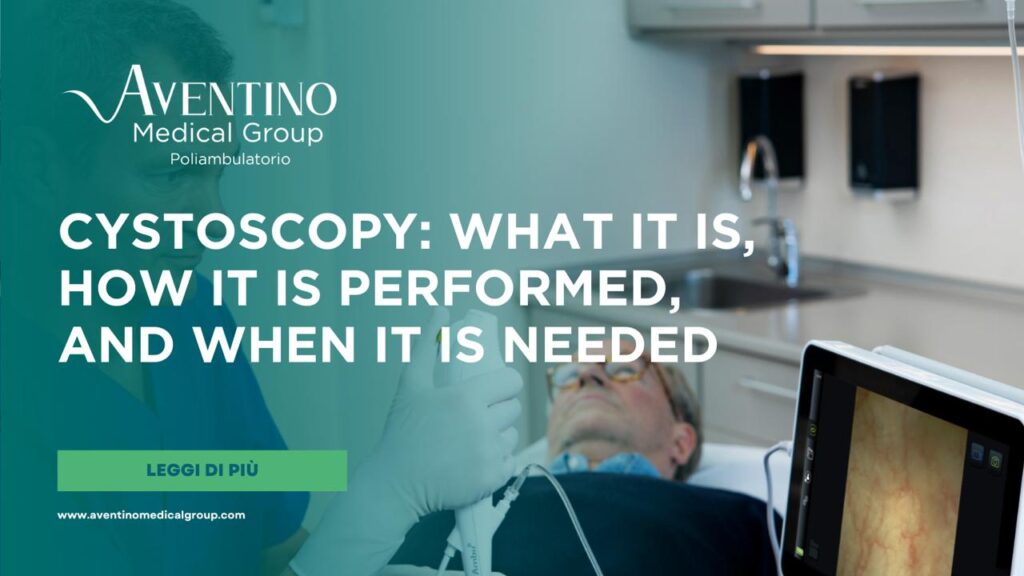
By Dr Alessandro Capozzoli, Urologist at Aventino Medical Group An examination that is often feared more than necessary, but which can be very important for investigating urinary symptoms and directly observing the inside of the bladder. What is cystoscopy? Cystoscopy is a urological examination that allows the doctor to directly visualise the inside of the urethra and bladder using a thin instrument called a cystoscope. It is a particularly useful test when symptoms or abnormalities need to be investigated further and cannot be explained with sufficient accuracy by indirect examinations, such as ultrasound or laboratory tests alone. When may cystoscopy be recommended? Cystoscopy may be indicated in several situations, for example in the presence of: Very often, it is prescribed after a urological consultation, when the doctor considers it useful to directly examine the bladder lining. How is the examination performed? The examination is performed by gently inserting the cystoscope through the urethra. Thanks to modern instruments, which are often flexible and small in diameter, the procedure is now much better tolerated than many patients imagine. In general, cystoscopy: The exact procedure may vary depending on the clinical case and the specialist’s assessment. Single-use flexible cystoscopes: an additional advantage At our clinic, cystoscopy is performed using sterile, single-use flexible cystoscopes, used for one patient only. This means that the instrument is always new, with consistent quality and no need for reprocessing between examinations, offering advantages in terms of organisation, availability and hygiene standards. Is cystoscopy painful? This is the question almost everyone asks. In most cases, cystoscopy is perceived as an uncomfortable but generally well-tolerated examination, especially when performed with modern instruments and with proper patient preparation. The idea of the examination is often more frightening than the examination itself. Receiving a clear explanation before the procedure can greatly help patients face it with greater peace of mind. Why can cystoscopy be so important? Cystoscopy is highly valuable because it allows the doctor to directly observe the inside of the bladder. This means that abnormalities can be identified or ruled out more accurately than with other tests, which may not show them with the same level of precision. For this reason, cystoscopy can be decisive when it is necessary to: When it is better not to postpone it If a urologist recommends cystoscopy, it is advisable not to postpone it without a clear reason. Delaying a useful examination often means prolonging uncertainty, anxiety and diagnostic times. Having the examination at the right time instead allows for quicker answers and helps determine the appropriate next steps. Conclusion Cystoscopy is a short, useful examination and is often much simpler than people think. When indicated, it is a valuable tool for reaching a clearer and more complete diagnosis. Have you noticed blood in your urine or other urinary symptoms?You may also read the related article: Blood in the urine: when a urological assessment is needed and which tests should be performed. Book a urological consultation at Aventino Medical Group to understand whether cystoscopy is indicated in your case.

Copertina_Sangue nelle urine_EN
News

Blood in the urine: when to worry and which tests to do

By Dr Alessandro Capozzoli, urologist at Aventino Medical Group Haematuria can have many different causes: from benign conditions to situations that require prompt investigation. Understanding when further assessment is needed is essential. A sign that should not be ignored The presence of blood in the urine, known as haematuria, is a sign that requires attention. Sometimes it may be due to temporary or less concerning causes, such as a mild urinary tract infection or intense physical exertion. In other cases, however, it may be the first warning sign of a condition that deserves specialist assessment. Even a single episode should not be underestimated, especially if the blood is visible to the naked eye or if the symptom tends to recur over time. What can cause blood in the urine? There are many possible causes. The most common include: In a smaller but clinically important number of cases, haematuria may also be associated with: For this reason, it is not advisable to wait for the symptom to “go away on its own” without clarifying its cause. When should you see a urologist? A urological assessment is particularly recommended when: Even when there is no pain, haematuria may still deserve attention. In fact, the absence of pain can lead people to postpone checks that it would be wiser to carry out earlier. Which tests may be useful? The diagnostic pathway varies depending on the patient’s age, symptoms and medical history. It may generally include: In some cases, however, these tests are not enough to clearly visualise the inside of the bladder and urethra. In these situations, the specialist may recommend a more precise investigation. When is cystoscopy needed? If the clinical suspicion requires it, one of the most useful examinations is cystoscopy, which allows the doctor to directly observe the inside of the bladder and urethra. This is an important step especially when: Today, cystoscopy performed with modern instruments is a quick examination and is generally well tolerated. Why it is better not to wait One of the most common mistakes is to think that a single episode of blood in the urine, especially if painless, is not important. In reality, early diagnosis can make a difference, because it allows doctors to: When to book a consultation If you have noticed blood in your urine, even only once, it is advisable to schedule a specialist assessment. A urological evaluation helps determine which tests are truly necessary and whether more in-depth examinations, such as cystoscopy, are indicated. Conclusion Blood in the urine does not always mean a serious condition, but it is always a sign that deserves attention. Addressing it in the right way allows you to obtain clear answers and take care of your health without delay. Would you like to better understand what this examination involves?You may also read the dedicated article: Cystoscopy: what it is, how it is performed and when it may be useful. Book a urological assessment at Aventino Medical Group for a complete and personalised evaluation.

Dermatological exam with epiluminescenza and early melanoma detection
News

Dermatological exam with epiluminescenza and early melanoma detection

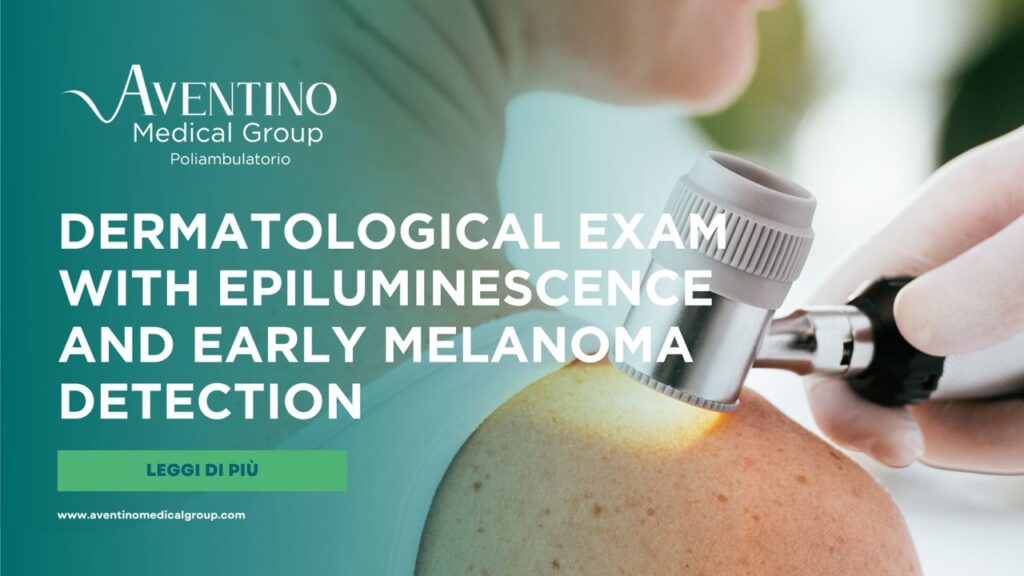
A simple test that can make a real differenceBy dermatologists Luigi Cornacchia, Eleonora De Luca and Marta Grimaldi Introduction Melanoma is a malignant skin tumour that develops from melanocytes, the cells responsible for producing melanin, the pigment that gives skin its colour. It may appear on apparently healthy skin or arise from a pre-existing mole. Although it is less common than other types of skin cancer, early detection is particularly important because melanoma can progress rapidly and spread to other organs if it is not diagnosed in time. Detecting melanoma at an early stage can therefore radically change the prognosis. Today, thanks to epiluminescence — also known as digital dermoscopy — it is possible to examine skin lesions in detail and identify early suspicious signs, often before they are visible to the naked eye. It is a quick, non-invasive examination and is becoming increasingly central to dermatological prevention. What is epiluminescence Epiluminescence is a diagnostic technique that uses a device called a videodermatoscope. This instrument magnifies the skin and illuminates its superficial layers and, when deemed necessary by the dermatologist, allows images of moles to be captured for follow-up over time. This enables the dermatologist to: ◆ analyze the structure, color, and borders of moles ◆ distinguish benign lesions from suspicious ones ◆ detect early signs of melanoma Compared to simple visual inspection, dermatoscopy provides a far more accurate and reliable evaluation. Why it is essential for early melanoma detection Melanoma is one of the most aggressive types of skin cancer, but it has a key characteristic: when detected early, it is highly treatable. Epiluminescence makes it possible to: ◆ identify changes before they become visible ◆ reduce unnecessary biopsies ◆ monitor high-risk moles over time “Early diagnosis is the most effective tool we have against melanoma.” When a dermatoscopy exam is recommended A dermatological examination with epiluminescence is recommended: ◆ once a year as a preventive check ◆ if you have many moles ◆ if you have a fair skin phototype ◆ in case of a family history of melanoma ◆ if a mole changes in shape, color, or size A useful reference for patients to identify potentially risky lesions is the ABCDE rule: If any of these signs appear, it is important to undergo a dermatological examination as soon as possible. A quick, painless, and non-invasive exam Epiluminescence: ◆ is painless ◆ requires no preparation ◆ takes about 20 minutes ◆ can be repeated over time without contraindications In some cases, digital images of selected lesions can be stored for future comparison, allowing precise monitoring over time and more accurate early diagnosis. The value of prevention Dermatological prevention is not only about checking moles, but also about taking conscious care of your skin. Proper sun exposure, the use of adequate protection, and regular check-ups are simple actions that can have a significant impact on your health.   Conclusion Epiluminescence is now one of the most effective tools for early melanoma detection. A simple, quick, and accessible examination that can truly make a difference. Taking just a few minutes for a check-up can mean intervening in time. Book a dermatological consultation at Aventino Medical Group for a thorough mole check and a personalized specialist evaluation.

Vaccinations in Rome a practical guide for people arriving from abroad
News

Vaccinations in Rome: A practical guide for people arriving from Abroad

By: Prof. Guido Castelli Gattinara (Pediatrician and Infectious Disease Specialist), Dr. Paola Groff (Pediatrician), Dr. Blegina Shashaj (Pediatrician), Dr. Catherine Stainier (Pediatrician). Why read this articleIf you are living in Rome with private health insurance, applying for — or not yet holding — an Italian Health Card (Tessera Sanitaria), or trying to align your children’s vaccination schedule with the Italian one, this guide will help you understand what to do, where to go, and how to request reimbursement. Understanding the Italian Vaccination Schedule The Lifetime Immunization Schedule – 5th Edition 2025, developed on the basis of recommendations issued by Italy’s leading scientific societies, offers a clear and practical guide to the vaccinations recommended at every stage of life. This framework is part of the institutional structure of the National Vaccination Prevention Plan (PNPV) 2023–2025, which serves as the national point of reference for vaccine policy in Italy. The vaccination schedule is uniform throughout the country, shared between the State and the Regions, and broadly aligned with those used in other Western countries. For adults, recommended vaccines vary according to age and clinical circumstances and may include: annual influenza vaccination, diphtheria-tetanus-pertussis (dTpa) boosters every 10 years, MMR/varicella in the absence of immunity (through previous illness or vaccination), HPV (human papillomavirus), pneumococcal vaccination, and herpes zoster vaccination for specific age groups or risk categories. In children, the Italian vaccination schedule includes both mandatory and recommended vaccinations, according to age. The mandatory vaccinations for children and adolescents aged 0 to 16, required for access to school communities, are:diphtheria, tetanus, poliomyelitis, hepatitis B, pertussis, Haemophilus influenzae type b, measles, mumps, rubella and varicella. Recommended vaccinations:pneumococcal disease, meningococcal disease, rotavirus, human papillomavirus — depending on age — and influenza in certain situations. Recommended vaccinations are not secondary: they are an essential part of paediatric prevention and help provide more complete protection, especially for more vulnerable children or during specific times of the year. Seasonal COVID-19 vaccination: each year, the Ministry of Health and the Italian National Institute of Health (ISS) publish updated recommendations. For 2024–25, revised doses were issued for different age groups. It is advisable to check the priority groups and dosage recommendations every season. Download the 2025 Life Immunization Schedule in PDF With or Without an Italian Health Card: What Changes? Where to Get Vaccinated in Rome Documentation: after vaccination, we provide complete documentation for school, travel, insurance, and reimbursement purposes, including the vaccine name, date, dose, site and route of administration, batch number, expiry date, physician’s signature, and official stamp. Children: How to Align a Foreign Vaccination Schedule If you arrive in Italy with a foreign vaccination booklet or record, it is important to always bring: Based on the documentation provided, the pediatrician or vaccinating physician can assess equivalence with the Italian schedule and, if necessary, propose a catch-up plan for any missing doses or boosters. Please note that the Italian vaccination schedule includes 10 mandatory vaccines for children and adolescents aged 0–16 years. RSV Immunization: What It Is and Where It Is Given In recent years, growing attention has been paid to the prevention of Respiratory Syncytial Virus (RSV), one of the leading causes of bronchiolitis and respiratory infections in infants, especially during the first months of life. In Italy, newborn protection may be provided through immunization with monoclonal antibodies. This is not the classic vaccine included in the routine pediatric vaccination schedule, but rather a preventive measure designed to protect newborns during the season of highest risk. Administration usually takes place in hospital, often in the maternity unit before discharge. In other cases, it may be arranged by the family pediatrician, where available, or by the local ASL vaccination centres. Adults: Which Vaccines Should Be Considered? The vaccinations most frequently considered in adulthood include: Other vaccinations may be indicated depending on personal circumstances, individual risk factors, or epidemic outbreaks, such as meningococcal ACWY or meningococcal B vaccination. Recommendations may vary according to age, medical history, pregnancy, occupation, travel plans, and the presence of chronic diseases: this is why a personalised medical assessment is always useful. For seasonal COVID-19 vaccination, updated recommendations should be checked every year. Vaccinations Before Travelling Abroad For some international trips, it may be important to check in advance whether specific boosters or vaccinations are needed, depending on the destination, type of stay, and personal circumstances. In some cases, vaccines are recommended; in others, they may be required for entry into the destination country. A dedicated blog article on this topic will be published shortly. School Requirements and Vaccination Documents For nursery, preschool and primary school, vaccination certificates, self-declarations or official proof of vaccination may be required. If some mandatory doses are missing, a catch-up plan may be requested within an agreed timeframe. It is always advisable to ask the school directly which documents are required and, if needed, contact the ASL or the doctor who administered the vaccinations in order to obtain the correct paperwork. Private Health Insurance: How to Request Reimbursement If you have private health insurance, it may be useful to check in advance: Always keep the invoice and all available medical documentation. Some insurers also require a prescription, a clinical indication or a medical certificate; others reimburse only the cost of the vaccine and not the medical service itself. Frequently Asked Questions I do not have an Italian Health Card: can I still be vaccinated? Yes. You can be vaccinated at a private medical facility, with direct payment and possible reimbursement from your insurance afterwards. I was vaccinated abroad: are those vaccines valid in Italy? Yes, provided they are properly documented. The physician will assess the equivalence of the products used and any boosters required according to the Italian PNPV. Useful Official Links 📍 Do you need to align a foreign vaccination schedule, plan booster doses, or organise vaccinations before travelling? Book an assessment at Aventino Medical Group. We help you define a clear, personalised vaccination pathway for both children and adults, and provide the documentation needed for school, work, insurance, and
pelvic organ prolapse diagnosis and treatment
News

Pelvic organ prolapse: diagnosis and treatment

By the Doctors: Nico Naumann, Gynecologist; Valeria Gianfreda, Pelvic Floor Surgeon; Francesca Maccioni, Radiologist and Ultrasound Specialist; Christine Blondeel, Midwife and Specialist in Pelvic Floor Rehabilitation. Dr. Nico Naumann, gynecologist, introduces a topic that concerns a great many women and that, even today, is often experienced in silence. Increasingly frequently, after menopause — but sometimes even before — patients report a sensation of pelvic heaviness or the perception that “something is descending.” During examination, a genital prolapse may be identified, with possible weakening of the anterior vaginal wall and involvement of the bladder, or of the rectal compartment. As Dr. Naumann emphasizes, symptoms may simultaneously affect multiple domains: urinary, intestinal, and sexual. For this reason, a comprehensive pelvic floor evaluation is essential today. Prolapse is not a problem “of a single organ.” It is a condition requiring a multidisciplinary approach and a three-compartment evaluation, integrating gynecological, surgical, diagnostic, and rehabilitative expertise. How common is prolapse and why does it occur? Dr. Valeria Gianfreda, a pelvic floor surgeon, explains that pelvic organ prolapse is far more common than many people think. Estimates suggest it may affect 30% to 50% of women, and the true figures may be even higher: many patients do not talk about their symptoms out of embarrassment or because they consider them “inevitable” after pregnancy or with advancing age. However, when prolapse starts to impact quality of life, effective diagnostic and treatment pathways are available. Why it occurs: main risk factorsProlapse is often the result of several factors that accumulate over time. The main risk factors include: Warning signs not to ignore Dr. Gianfreda reminds us that prolapse rarely presents with a single, isolated symptom. More often, it involves multiple compartments (bladder, vagina/uterus, rectum). Urinary area Genital area Rectal area 👉 The right time to consult a specialist is when these symptoms start to affect daily activities, well-being, and quality of relationships. Diagnosis: why dynamic examinations are needed Dr. Francesca Maccioni, radiologist and ultrasound specialist, explains that when pelvic organ prolapse is discussed, it is often seen as a “bladder” or “bowel” problem. In reality, the pelvic floor is an integrated system: the organs influence one another, and symptoms can be mixed. For this reason, the most appropriate diagnostic approach is often dynamic imaging: it does not simply capture the organs’ position, but observes their movement during function. Dynamic examinations make it possible to assess: This approach is essential to avoid partial diagnoses and to plan targeted therapy. MR defecography Magnetic resonance imaging with a defecographic study makes it possible to evaluate the bladder, uterus/vagina, and rectum during functional maneuvers. It is particularly indicated in the presence of: Dynamic cysto-colpo-defecography This is an alternative diagnostic method with the same goal: to functionally document organ descent and their reciprocal relationships. As Dr. Maccioni explains, the choice between the two examinations depends on: Complementary examinations Depending on the clinical picture, the following may be added: These are not alternatives to dynamic examinations, but pieces that complete the diagnostic puzzle. When surgery is needed Dr. Valeria Gianfreda explains that surgery is considered mainly for prolapse beyond stage II, when symptoms have a tangible impact on everyday life: walking, working, traveling, having sexual intercourse, and taking care of oneself. A key point is uterine preservation whenever possible. A hysterectomy can alter pelvic anatomy and affect bladder and rectal function, in addition to having a significant emotional impact. For this reason, it is avoided unless strictly necessary. Minimally invasive P.O.P.S. technique The P.O.P.S. technique is a minimally invasive laparoscopic procedure for multi-organ prolapse. It involves: A benefit that many patients particularly value is preservation of the uterus, when clinically feasible. Rehabilitation: the core of the therapeutic pathway Dr. Christine Blondeel, a midwife specialized in pelvic floor rehabilitation, emphasizes that prolapse treatment is not the same for every woman. It follows a gradual and personalized pathway, as also recommended by the guidelines of the International Continence Society (ICS) and the International Urogynecological Association (IUGA). Early prolapse (stages I–II): when rehabilitation can make a difference In the early stages, in the absence of severe symptoms, first-line treatment is conservative. A structured Pelvic Floor Muscle Training (PFMT) program can: The pathway begins with an assessment of proprioception and the ability to perform a voluntary contraction. If difficulties are identified, biofeedback or functional electrical stimulation may be used.In parallel, work focuses on: Preoperative rehabilitation When prolapse is advanced (stages III–IV) and surgery is indicated, preoperative rehabilitation significantly improves outcomes. The program includes: 1️⃣ Pelvic floor strengthening2️⃣Deep abdominal strengthening (hypopressive exercises, transversus abdominis activation)3️⃣ Behavioral education, with attention to: Patients who prepare the perineum before surgery often show better postoperative contraction and less loss of tone. Postoperative rehabilitation Surgery restores anatomy, but it does not automatically correct muscular dysfunction or abdomino-pelvic dynamics. Dr. Blondeel notes that postoperative rehabilitation—generally started 6–8 weeks after surgery, as advised by the surgeon—aims to: One of the main factors behind recurrence is chronic increased intra-abdominal pressure (constipation, persistent cough, heavy lifting, breath-holding during effort). Pelvic floor education teaches exhalation–contraction coordination and non-straining bowel strategies, which are essential to maintain surgical results over time. An integrated pathway for pelvic floor health As Dr. Nico Naumann reiterates, prolapse should not be experienced as a condition to simply “put up with.” It is common, but today it can be managed with tailored strategies. At Aventino Medical Group in Rome, the pathway is truly multidisciplinary: The goal is not only to correct anatomy, but to restore quality of life, function, and well-being. If you have persistent urinary, genital, or intestinal symptoms—such as a sensation of pelvic heaviness, incontinence, urgency, or difficulty with bowel movements—book a specialist evaluation to set up a comprehensive, personalized care pathway. Pelvic floor health deserves attention, expertise, and an integrated approach.

How emergency care works in Italy
News

How Emergency Care Works in Italy

By Dr. Gabriella Nataloni and Dr. Alessandro Cristaudo, internal medicine physicians at Aventino Medical Group, Rome. Practical guide for people living in or staying in Rome In Italy, medical emergencies are managed mainly by hospital Emergency Departments (Pronto Soccorso – PS) and the territorial emergency system (118 / 112).Access to care does not follow the order of arrival, but the severity of the condition. Understanding when to go to the Emergency Department, which numbers to call and what to expect is essential if you live in Rome or are here temporarily. When and how to access the Emergency Department You can reach the Emergency Department (PS) in four ways: When the Emergency Department is appropriate It is indicated for problems that cannot wait, such as: For minor issues (colds, mild pain, prescription renewals, medical certificates, routine check-ups), it is better to contact: Triage: who is seen first When you arrive at the ED, a triage nurse quickly assesses your condition (blood pressure, oxygen saturation, symptoms, brief history) and assigns a priority code. In the Lazio region a 5-code system is used: Code Colour Meaning Examples 1 🔴 Red Absolute emergency – immediate cardiac arrest, shock, coma 2 🟠 Orange High urgency – very rapid chest pain, major trauma 3 🔵 Light blue Deferrable urgency – can wait high fever, moderate pain 4 🟢 Green Minor urgency mild symptoms, localised pain 👉 This system is not a matter of politeness, but a way to ensure that people whose lives are at risk are treated immediately, even if they arrived later than others. What happens once you arrive The typical Emergency Department pathway: 1. Registration (Accettazione) Your personal details are recorded. You will be asked for:– ID card or passport– Italian health card (if available)– any insurance documents 2. Triage Brief symptom assessment and assignment of a priority code. 3. Waiting time Depends on:– the code assigned– the number of patients present– available resources (doctors, beds, etc.) 4. Medical examination and tests The doctor decides which tests are needed, for example:– blood and urine tests– ECG– X-rays, CT scan, ultrasound, etc. 5. Final decision – discharge with treatment plan and instructions– short-stay observation (OBI – Osservazione Breve Intensiva) for a few hours– hospital admission to a ward Waiting times: what is realistic On average (indicative values): During periods of high attendance (weekends, flu season, viral outbreaks, public holidays), waiting times are longer, especially for less serious conditions. Indicative waiting times on regional portals (e.g., Salute Lazio – Emergency Room). Costs and co-payments If you have an Italian health card (SSN) If you do not have an Italian health card You may have to pay the full cost of care at the time of service, unless: Private hospitals and clinics Where to go in Rome in case of emergency Major public hospitals with Emergency Department (short, non-exhaustive list) Private accredited hospitals with ED under the National Health Service (SSN) In these hospitals, the Emergency Department can work both under the SSN (with health card) and in private / insurance mode. 24/7 urgent care in private clinics (non-SSN ED) These clinics provide 24/7 private urgent care, with the possibility of admission and, often, English-speaking and multilingual staff. What the Emergency Department does (and does not) treat Typical Emergency Department situations Situations not for the Emergency Department In these cases it is more appropriate to contact: Documents and information to bring When you go to the Emergency Department, it is useful to bring: 👉 Always ask for a detailed invoice (“fattura parlante”) if you may need an insurance reimbursement. Paediatric emergencies For children, it is preferable, when possible, to go to a paediatric Emergency Department: Other general hospitals (e.g. San Camillo, Sant’Eugenio) can offer paediatric consultations, but they do not have a dedicated paediatric ED. Practical tips for visitors and expats Useful numbers in Italy Service Number Note Medical emergency 118 Ambulance / emergency medical aid Single emergency number 112 Police, carabinieri, fire, rescue Out-of-hours medical service 116117 Non-urgent problems outside GP hours Lazio regional health information 800 118 800 Salute Lazio toll-free number

News

Getting healthcare in Rome: how to navigate SSN and private care without wasting time

In Rome you can receive care through the SSN (public) and the private sector. They often work in combination. Here you’ll find: how to access care, useful documents, payments/reimbursements, and when to choose one or the other. How does the SSN work in Rome, in practice? Strengths: hospital network, chronic-care pathways, inpatient coverage.Frequent limits in Rome: waits for visits/diagnostics, uneven availability, language barrier. How does private care work (with or without insurance)? Strengths: fast timelines, flexible hours, multilingual staff, insurance support.Limits: costs if not covered; some policies require pre-authorisations. SSN or private: when is one, the other, or both worthwhile? Which documents should I always carry? I’m not resident in Rome/Italy: what changes for me? EU/EEA/CH on a short visit EU resident in Rome Non-EU with permit and resident Non-EU non-resident (tourism/short stay) Staff of international organisations (e.g. UN) Students How do I book SSN visits/exams step-by-step? How do I get reimbursed for a private visit with insurance? Quick FAQs (most searched) Can I combine public and private care?Yes—often the best choice: SSN for continuity/hospital care; private for timelines, language, coordination and insurance. I’m not in the SSN: can I still get care?Yes: in the private sector (ideally with a policy). For non-deferrable needs in the public system there are STP/ENI. How does the Emergency Department work?Open access for emergencies; priority set by 5-level triage. What does TEAM/EHIC cover?Medically necessary public care under the same conditions as residents (co-pays may apply). Are teleconsultations and home visits available?In the private sector they often are, when clinically appropriate. Immediate checklist before you leave home Useful numbers Key message (to remember) In Rome, the public system remains central for emergencies and chronic care, and hospital admissions are available in both the public and private sectors. The private route is a primary option when speed, multilingual care, coordinated specialists, and insurance documentation are priorities. Thoughtfully combining the two pathways helps you get better care, faster.